


La guía completa para visitar los lugares más espectaculares de La Rioja Alta

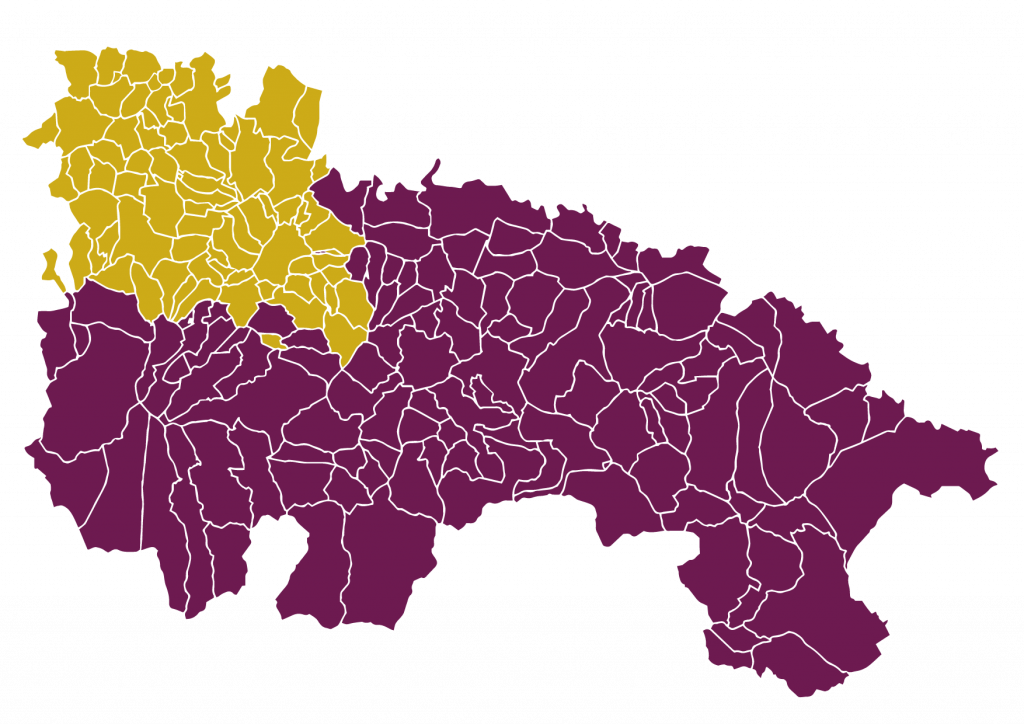
Upper Rioja is the westernmost region of La Rioja and is bathed by the rivers Tirón, Oja and Najerilla.

There are 3 counties within La Rioja Alta:

  • The Haro region con 26 municipios y 21.368 habitantes de los cuales la mitad pertenecen al municipio de Haro.
  • The Nájera region con 25 municipios y 14.761 habitantes de los cuales 8.268 viven en Nájera.
  • The the region of Santo Domingo de la Calzada con 16 municipios y 9.621 habitantes de los cuales 6.614 viven en Santo Domingo de la Calzada.

Below, you will find a list of the most emblematic places que no puedes perderte de La Rioja Alta

La Rioja Alta Mapa

DESCUBRE LA RIOJA PREMIUM

GUÍA PARA DESCUBRIR LA RIOJA ALTA

1. HARO, NÁJERA Y SANTO DOMINGO DE LA CALZADA

En La Rioja Alta hay tres localidades que despuntan en cuanto a número de habitantes y estas son Haro, Nájera y Santo Domingo de la Calzada, las tres cabeceras de comarca.

Conozcamos los principales motivos que justifican la visita a cada una de estas localidades.

1.1. Haro Capital del Rioja

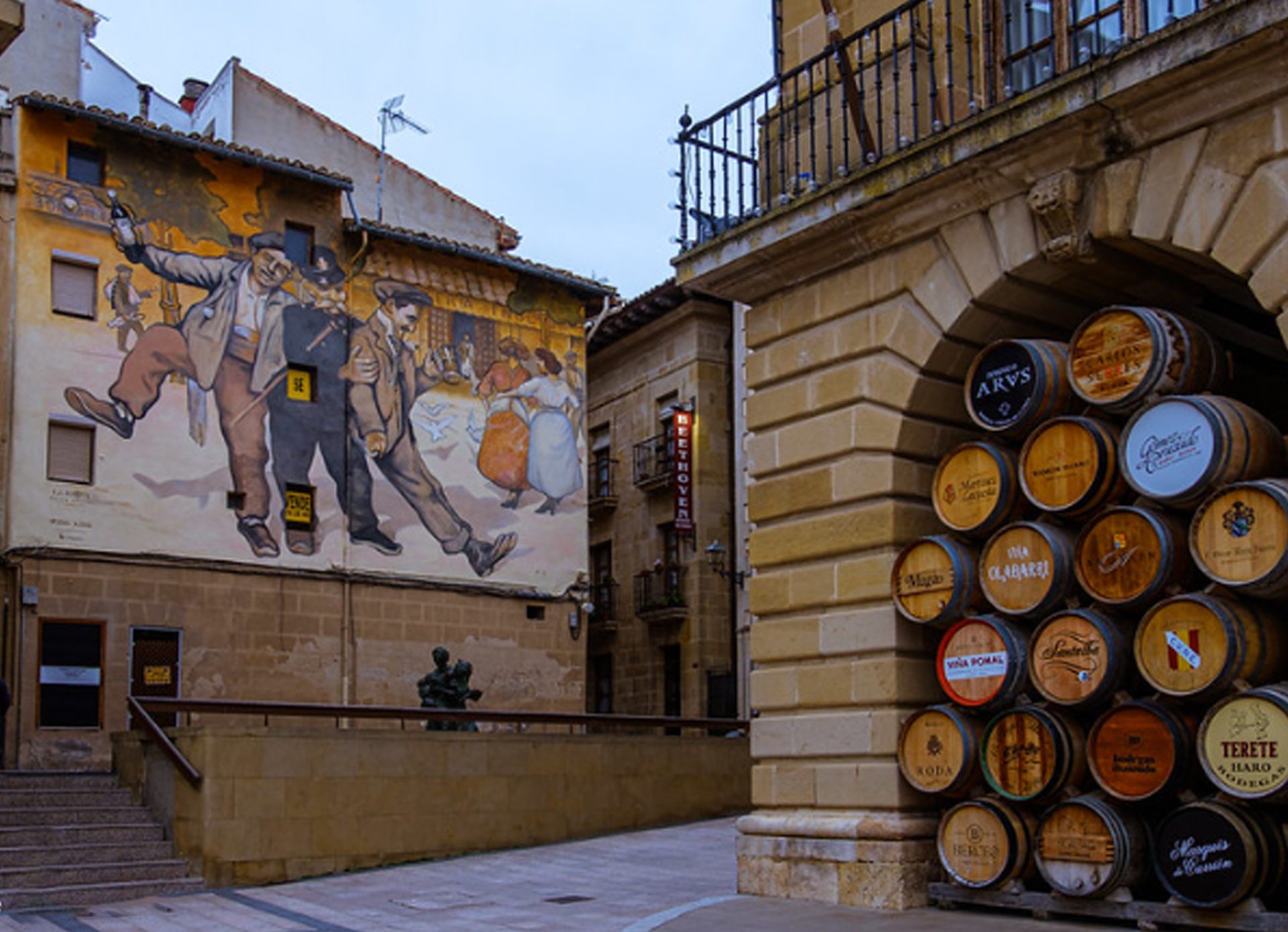
Haro

Haro es una pequeña ciudad con nombre de vino y aires de grandeza como reza el dicho popular: “Haro, París y Londres”, o el otro, “Ya estamos en Haro que se ven las luces” haciendo referencia a que fue una de las primeras localidades en disponer de alumbrado público.

Lo primero que llama la atención de Haro es el Station District, el cual alberga la mayor concentración de bodegas centenarias del mundo que cada año reciben a más de 250.000 turistas.

Una visita a Gómez Cruzado y su winebar puede ser una excelente manera de descubrirlo.

La siguiente parada está en el casco antiguo de Haro y su zona de tapeo más tradicional, La Herradura.

En el casco antiguo podrás visitar la Parroquia de Santo Tomás de Aquino, así como la Plaza de la Paz, su Ayuntamiento, su oficina de turismo y biblioteca, y diversos palacetes que reflejan la pujanza económica de ciertas familias en otras épocas.

Visita obligatoria son los Jardines de la Vega y la Basílica de la Vega a la que tanta devoción guardan los Jarreros.

Si quieres disfrutar de buenas vistas y de un rincón único puedes acercarte hasta la Ermita de San Felices de Bilibio en lo alto de los riscos. Lugar en que cada 29 de junio tiene lugar la afamada Batalla del Vino.

Si eres de los que disfrutan de las alturas descubrirás los mejores miradores de toda La Rioja.

1.2. El Reino de Nájera

Santa María La Real

Nájera fue la capital del Reino de Nájera entre los años 923 y 1113. Siendo la cuna de los Reinos de Navarra, Aragón y Castilla.

Historically, the Monastery of Santa María La Real of Nájera es uno de los más importantes de la región como veremos más adelante.

Por su parte, Nájera es una de las localidades riojanas más importantes que recorre el Camino de Santiago. Destacando otros monumentos religiosos como el Convento de Santa Elena, la iglesia de La Santa Cruz y la Capilla de la Madre de Dios.

En los últimos años se está llevando a cabo importantes excavaciones en el Cerro de la Mota donde se alzaba el Castillo de la Mota así como el alcázar en las cuevas existentes entre el castillo y el casco urbano.

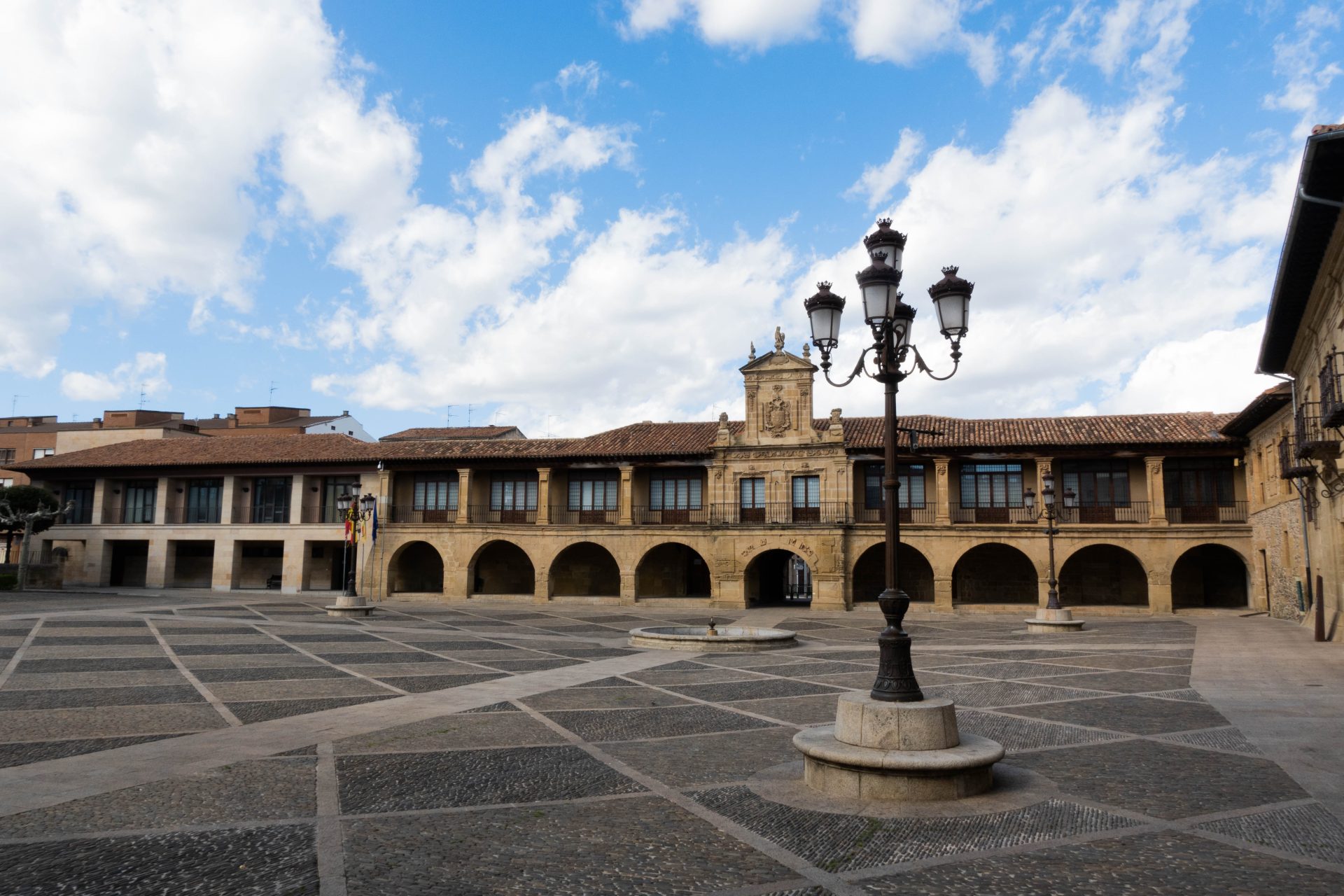
1.3. Santo Domingo de la Calzada en La Rioja Alta

Santo DOmingo de la Calzada

Santo Domingo is a typical village on the Camino de Santiago which is fully serviced and of which the following stand out its cathedral with a free-standing tower. Visita obligada ambas, catedral y subida a la torre. No puedes irte de Santo Domingo sin que te cuenten el Milagro de a Gallina, como pista tienes que su Catedral es el único templo donde viven animales, un gallo y una gallina.

Santo Domingo cuenta con un walled enclosure, el mayor que se conserva en La Rioja que invita a descubrir sus plazas, palacios y ese ambiente que invade los pueblos que que forman parte del Camino.

San Vicente de la Sonsierra
Cuzcurrita de Río Tirón

2. CASTILLOS QUE MERECEN UNA VISITA EN LA RIOJA ALTA

Due to its strategic position, La Rioja has been for centuries, and depending on the period, a border region between the kingdoms of Navarre, Castile and also Al-Andalus.

Esto promovió que se construyeran numerosos castles and fortresses for military purposes to help each side defend its territory.

As a result, today in the 21st century, we can still contemplate a large part of this historical heritage. Ya que pese a que algunos castillos estén hoy completamente desaparecidos como es el caso del castillo de Cellorigo, otros se mantienen perfectamente restaurados como es el caso de los castillos de Cuzcurrita de Río Tirón o de Sajazarra.

2.1. Castillo de Cuzcurrita de Río Tirón

Castillo de Cuzcurrita

In the heart of the historic centre of Cuzcurrita, next to the river Tirón, is located the castle de los Velasco que fue construido a finales del siglo XV por Pedro Suárez de Figueroa. Se trata de un recinto amurallado con cubos en los ángulos y una esbelta torre del homenaje, que no tiene ninguna ventana en sus muros.

En el siglo XVI, durante el reinado de Felipe II, Pedro de Velasco, IX señor de Cuzcurrita, fundó mayorazgo al casarse con Marta de Rojas y Osorio, labrando the coat of arms of the pointed arched doorway on the north wall, defended by a beautiful matacan.

In the back of the castleNext to the washhouse is the waterfall that falls from the channel that starts at the dam and joins the river Tirón at this point.

2.2. CASTILLO DE SAJAZARRA

Castillo de Sajazarra

In the 15th century there was a primitive tower in Sajazarra that was destroyed for building the castle which, a century later, continued to undergo remodelling and changes until it became the imposing construction that we can see today.

Its history is linked to that of Haro, which passed into Castilian hands in 1430. Its owner, Pedro Fernández de Velasco, also owned other castles such as Cerezo, Ojacastro and Arnedo. It belonged to the Counts of Nieva and defended the northern part of the town and the road from Haro to Miranda.

The tower of homage rises above the rest of the building. It is located in the centre of the fortress. It is rectangular in shape and has four octagonal-shaped garitons at its corners.

The entry is framed by two cubes which serve as an aid to its defence. It seems that the fortress had a moat that is now covered.

Like all these buildings, the material used for its construction was stone. Its state of conservation he is very good at being a holder private.

2.3. Castillo de Davalillo

The castle of Davalillo is a Romanesque building from the end of the 12th century Alfonso VIII reigned in Castile.

Davalillo was a village that has now disappeared, and now belongs to the town of San Asensio, 5 km from it, of which part of the castle is preserved and at its foot the Hermitage of Nuestra Señora de Davalillo.

In 2019 the castle was acquired by a major local winery with plans to renovate it.

2.4. Castillo de San Vicente de la Sonsierra

San Vicente El Calvario

The castle of San Vicente de la Sonsierra was built on the top of a hill by order of the King of Navarre Sancho IV in 1170. Opposite it and on the other side of the river Ebro is the castle of Davalillo, which belonged to the Kingdom of Castile.

It is a military construction which was used until the end of the Carlist Wars in 1876.

It has undergone numerous restorations in recent decades.

Aquí encontrarás un listados con todos los castillos y fortalezas de La Rioja.

3. MONASTERIOS, IGLESIAS, CATEDRALES Y ERMITAS DE LA RIOJA ALTA

The religious heritage makes up an important part of the cultural wealth throughout Spain.

In addition to the many churches and hermitages that can be found in every village in La Rioja, there are several in the La Rioja Alta valley area. monuments worth noting.

3.1. Monasterio de Santa María La Real en Nájera

Santa María La Real

Historically, the Monastery of Santa María La Real of Nájera is, together with the monasteries of Yuso and Suso de San Millán de la Cogolla, the most important in the whole region, since Nájera was the capital of the Kingdom of Nájera between 923 and 1113. It was the cradle of the Kingdoms of Navarre, Aragon and Castile.

In 1044, the King of Navarre, García Sánchez III, while hunting for falconry, found a small chapel with the Virgin, a bouquet of lilies, a lamp and a bell. Due to the triumphs in successive wars, he ordered the construction of a new chapel. the primitive temple to the Virgin of the Cave which opens in 1052.

The present church was built between 1422 and 1453.

The cloister of the knights was built between 1517 and 1528.

The list of historical figures buried in the monastery more than thirty, most of them belonging to royalty.

3.2. Monasterio de Nuestra Señora de la Piedad en Casalarreina

Monasterio de la Piedad

The construction of the convent began on 10 April 1514 in Elizabethan Gothic and Renaissance Plateresque style.

It has church and cloister Gothic with a square floor plan and double height.

Despite its single nave, the interior of the church is spacious and bright. In the nave and in the niche-shaped side chapels, which are connected to each other, there are further Baroque altarpieces and a small Plateresque altarpiece. On the floor of the hall, a slab of marble belonging to Juan Fernández de Velasco proclaims in an epitaph composed in golden letters: "O Jesus, do not look upon my woes, for do not forget your name".

Today, it is a monastery of Dominican Contemplative nuns.

3.3. Monasterio de Santa María de la Estrella en San Asensio

Monasterio la estrella

The Monasterio de la Estrella, from gothic and neo-gothic styleIts construction began in 1419 and its period of greatest splendour was in the 15th and 16th centuries.

During the 19th century it suffered great deterioration until 1951, when the Brothers of the Christian Schools acquired the monastery.

Since 1997 it has housed a Secondary School.

3.4. Monasterio Cisterciense de Cañas

Monasterio de Cañas

This Cistercian Abbey is one of the first to be founded in Spain.

The construction of this monastery can be divided into three stages, the Romanesque of which hardly any vestiges remain, the gothic which would correspond to part of the church and chapter house, dated to the second half of the 13th century, and the post-16th century in which the construction of the central nave was continued, leaving the two side naves unfinished.

The church of the monastery is surprising for its high brightness through its large windows. The large renaissance altarpiece was ordered to be built by the abbess Leonor de Osorio around 1523 in the form of a triptych that until 1975 was in the prebistery, and is now located at the foot of the church.

The façade of the chapter house stands out for its singular beauty with its three pointed arches decorated with plant motifs. Inside, the most outstanding feature is the gothic style tomb de comienzos del siglo XIV de la beata Doña Urraca López de Haro, hija de los fundadores, que vistió los hábitos desde muy joven llegando a ser la cuarta abadesa de la comunidad. Falleció el año 1262, conservándose su cuerpo incorrupto.

The abbey has two museums: the Relic Room containing four groups of collections dating from the year of the monastery's foundation to the 20th century; and the chair museum en el que se han instalado various altarpieces that existed in the churches, carvings, reliefs and paintings of singular interest.

The community of Cistercian nuns have continuously inhabited the monastery since its foundation. and devotes himself to manual labour and prayer. They decorate porcelainthey elaborate sweetsthey make rosaries and have a small hostelry.

3.5. Catedral de Santo Domingo de la Calzada

The Cathedral of Santo Domingo de la Calzada is one of the most important obligatory stop on the Camino de Santiago French.

It was built over a primitive Romanesque church from 1098 and became a cathedral in 1232.

The current free-standing tower dates from 1762 and was the work of Martín de Beratúa.

As a curiosity, the cathedral houses a gothic chicken coop that with a white cockerel and a white hen in memory of the miracle of the Santo Domingo de la Calzada, where the hen sang after roasting.

Descubre 7 monasterios de La Rioja llenos de historia y misticismo.

3.6. Ermita de San Felices de Bilibio en Haro

Mundialmente es conocida La Batalla del Vino que tiene lugar la madruga del 29 de junio en Haro, más concretamente, en los riscos de Bilibio, en la Ermita de San Felices.

Este paraje se encuentra a 6km de Haro, al que se accede por una carretera de cuento.

En la parte baja hay multitud de mesas con sombra donde poder hacer picnic y disfrutar de una comida o una buena charla. Sin embargo, es en lo alto de los riscos donde se haya la Ermita y la imagen de San Felices la cual se aprecia desde lo lejos.

Escaleras arriba cada rincón es un lugar donde detenerse y observar. Las Conchas de Haro, la cantera, los viñedos, la montaña… hasta llegar a la Ermita.

3.7. Ermita de Santa María de la Piscina en Peciña

The Hermitage of Sta María de la Piscina está ubicada sobre una pequeña colina que domina el Valle del Ebro un km antes de llegar a la aldea de Peciña.

Es el edificio mejor conservado del románico en La Rioja construido en el siglo XII.

The conjunto arqueológico está formado por la Ermita de Santa María de la Piscina, una necrópolis de repoblación, un poblado con viviendas semirrupestres y restos de fortificaciones o atalayas.

Tras las obras de restauración de la ermita (1976-1978) se realizaron una serie de excavaciones alrededor de la misma que descubrieron la existencia de un poblado medieval de los siglos X al XIV.

Hacia el siglo XIV se despobló por la guerra civil castellana y sus habitantes formarían después la cercana aldea de Peciña.

Just 300m from the hermitage in the direction of Peciña is the access to the dolmen of La Cascaja in a good state of preservation.

3.8. Ermita de la Esclavitud en Cihuri

Ermita de la Esclavitud

La Ermita de la Esclavitud es una construcción edificada sobre una cueva monástica, que ya en épocas visigótica y mozárabe estuvo habitada, siendo uno de los muchos eremitorios de la cuenca del río Tirón y de los montes Obarenes.

La cueva todavía existe y puede verse desde la parte trasera de la construcción actual.

La Ermita construida en 2019 tiene forma de guardaviñas y se construyó en base a la numerología sagrada.

El entorno cuenta con aparcamiento, arbolado, fuentes, barbacoas, merendero, pérgolas y un lago. Además de una vistas magníficas de viñedos, la sierra de la Demanda, con su pico de San Lorenzo y al norte, los Montes Obarenes con sus Peñas de Jembres.

The whole of La Rioja is full of ermitas de todas las épocas y tamaños. Cada pueblo tiene la suya y en ocasiones más de una. Visitar estas construcciones es una gran forma de descubrir el pasado de este territorio y su historia.

4. LOS PUENTES MÁS BONITOS DE LA RIOJA ALTA

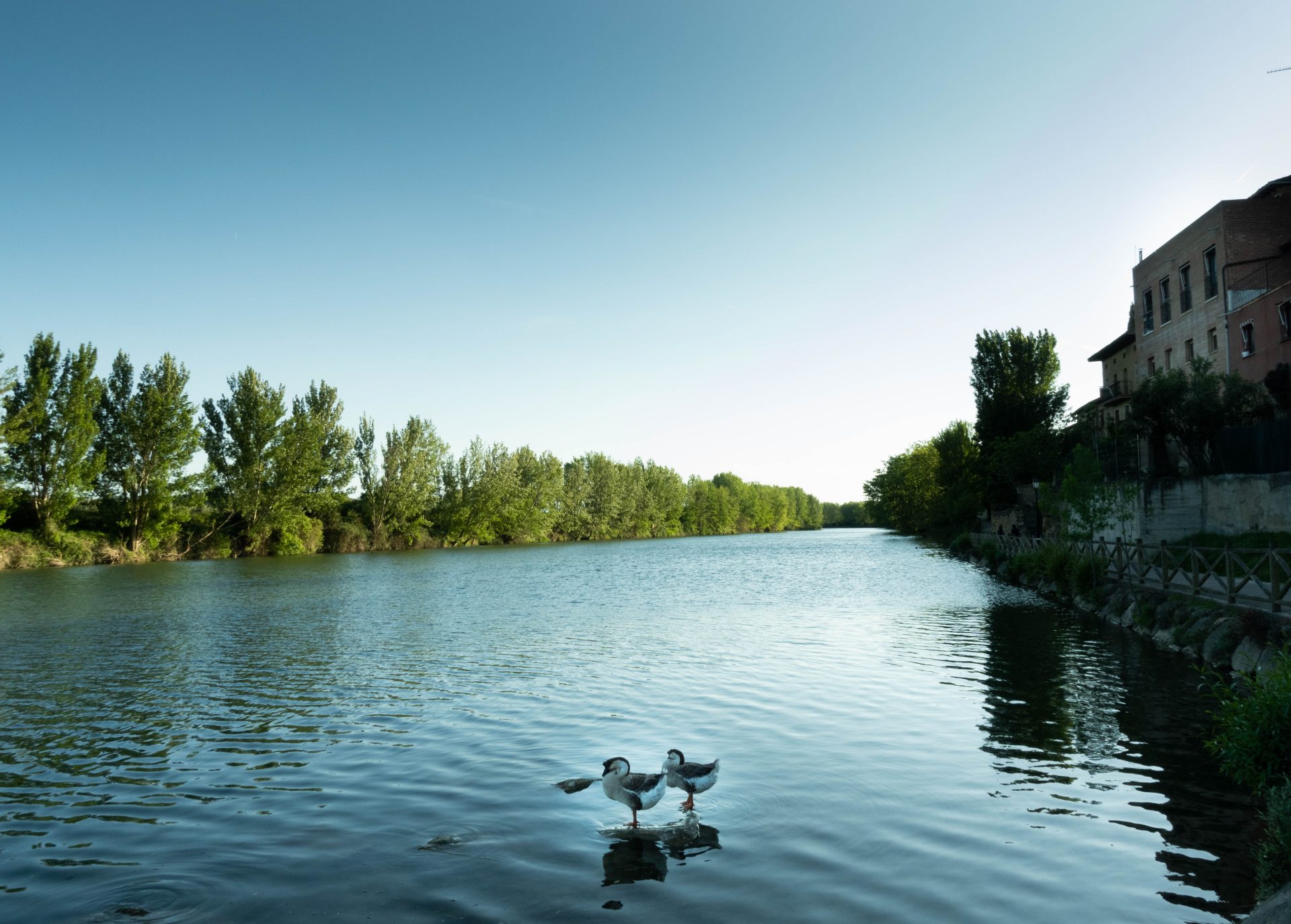
La Rioja alta esta bañada por los ríos Ebro, Tirón, Oja y Najerilla situándose las localidades de manera natural en torno a los mismos. De manera que cada pueblo tiene uno o varios puentes que facilitan el acceso.

Aquí te señalamos algunos de los más interesantes de visitar.

4.1. Puente de Briñas sobre el Río Ebro

rio Ebro

El conocido como puente de Briñas es uno de los puentes que cruza el Ebro en este caso en territorio de Haro pese a su nombre.

It is a puente de estilo gótico con 7 ojos, 150 metros de largo y 4.6 metros de ancho.

Tanto el puente como el entorno gozan de gran belleza.

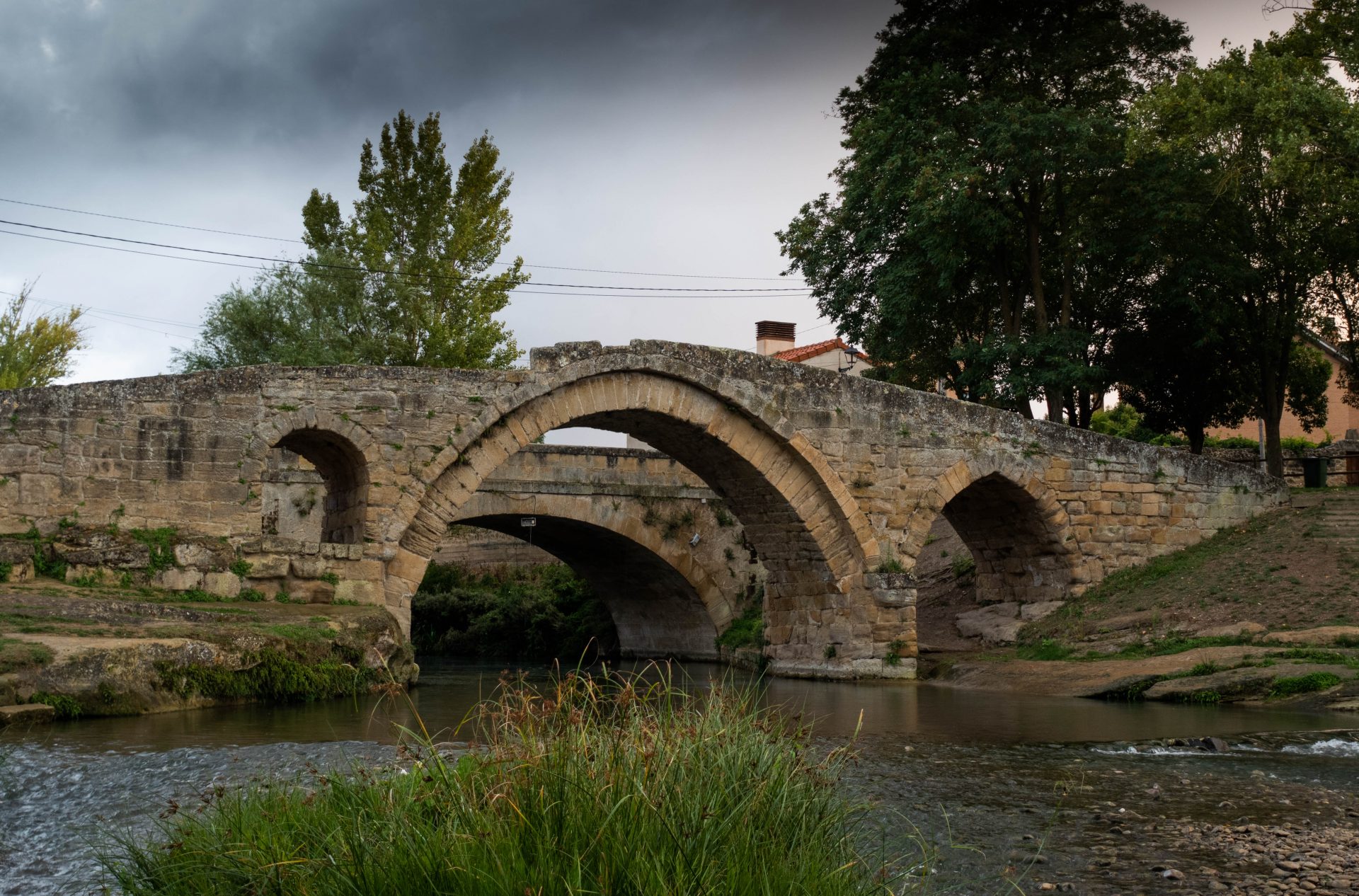
4.2. Puente Romano sobre el Río Tirón en Cihuri

Puente Romano de Cihuri

In Cihuri you can find the 2nd century Roman bridge on the River Tirón in a good state of conservation.

In the immediate vicinity is the Priory House and a cave.

Crossing the bridge you can start a path along the banks of the river Tirón that takes you to the exact point where the River Oja joins the River Tirónabout 800m away.

4.3. PUENTE DE SAN VICENTE DE LA SONSIERRA SOBRE EL RÍO EBRO

La Rioja

The bridge of San Vicente de la Sonsierra is located to the west of the town, below the castle, on the local road from Briones to Peñacerrada. It is the first thing we see if we access it from this road.

Due to its excellent position, it defended the Ebro crossing of the border between Navarre and Castile. It is possible that its existence dates back to 1172, however, the earliest preserved can be traced back to the 13th century.

It consisted of thirteen pointed archeson triangular cutwater piles and rectangular spurs and two defensive towers, one in the centre, and probably another at the entrance on the left bank. This construction was rebuilt at the end of the 16th century, becoming a bridge with twelve arches and a single tower.

Está construido en sillería y mampostería. Actualmente has nine archesin different lights and shapes.

5. GUARDAVIÑAS PARA VISITAR EN LA RIOJA ALTA

Los guardaviñas o chozos son unas pequeñas construcciones características de La Rioja que servían como refugio a agricultores y sus animales.

Los que existen a día de hoy fueron construidos en su mayoría en el 19th century. Encontrándose la mayoría de ellos en las localidades de Briones, San Vicente de la Sonsierra, San Asensio y Ábalos.

5.1. Guardaviñas del Bombón en San Vicente de la Sonsierra

Guardaviñas en La Rioja

Guardaviñas de muy fácil acceso ya que se encuentra a los pies de la carretera LR-318 en la localidad de San Vicente.

Esta localidad cuenta con un buen número de estas construcciones repartidos a lo largo y ancho de su jurisdicción.

5.2. Guardaviñas de Pangua y Necrópolis

Desde San Vicente camino hacia Rivas de Tereso nos encontramos con el guardaviñas de Pangua a mano derecha.

Siguiendo ese mismo camino que se desvía de la LR-317 llegas a la necrópolis del antiguo convento de San Martin de Pangua.

6. MUSEOS Y SALAS DE EXPOSICIÓN EN LA RIOJA ALTA

Repartidos por la Rioja Alta encontramos algunos museos y salas de exposiciones que nos ayudan a entender la historia de la zona y descubrir artistas locales y forasteros.

6.1. Museo del Torreón de Arte Contemporáneo en Haro

En la Plaza de la Paz se encuentra El Torreón un museo de contemporary art con exposiciones temporales que guarda una bonita sorpresa.

Y es que además de disfrutar de la exposición, subiendo a lo más alto del edificio llegamos a un mirador con unas vistas fantásticas de la plaza de Haro.

Horario de martes a sábado es de 11h a 14h y de 16h a 19h. Domingos de 11h a 14:30h.

6.2. La Casa Encantada en Briones - Museo Etnográfico

casa encantada

El museo se encuentra en el Palacio de San Nicolás que también alberga las dependencias municipales.

Cuenta con una sala para exposiciones temporales y el resto de las plantas representan las distintas dependencias de una casa de principios del siglo XX, su mobiliario, sus enseres y sus tareas diarias.

The timetable es de martes a sábado de 11h a 14h y de 16h a 18h. Los domingos y festivos de 11h a 14h.

6.3. Museo de Nájera

El edificio que alberga el Museo fue construido en el s. XVIII como residencia del abad del monasterio de Santa María la Real.

La exposición permanente presenta aspectos significativos de la arqueología del Valle del Najerilla. A través de sus tres salas y pasillo central se exponen ****una selección de materiales de la colección arqueológica que abarca desde la Prehistoria hasta la Edad Moderna.

El horario es de martes a sábado de 11h a 14h y de 17h a 20h. Domingos y festivos de 11h a 14h.

6.4. Centro de Interpretación del Románico en Treviana

The Centro del Románico de Treviana cuenta con tres espacios:

Una sala de proyección, con un espectacular audiovisual. Una sala de exposición, con paneles informativos, piezas de cantería y espacio para talleres educativos. Una sala de documentación, con una amplia biblioteca dedicada a la Edad Media en general y al Arte Románico en particular.

Abierto domingos y festivos de 12h a 14h.

7. EL PAISAJE DE LA RIOJA ALTA A TRAVÉS DEL CAMINO DE SANTIAGO

Through La Rioja passes the The French Way of Saint James listed as a World Heritage Site in 1993. The last stretch of the route known as the "La Rioja Alta" also runs through La Rioja Alta. Basque Way of Saint James.

7.1. Camino de Santiago Francés

Mirador Grañon

The French way enters La Rioja Alta through Nájera coming from Logroño and other villages of La Rioja Media.

From Nájera it reaches Azofra, Cirueña, Santo Domingo de la Calzada and Grañón.The route continues on to Belorado, now in the province of Burgos.

7.2. Camino de Santiago Vasco

The Basque Way of St. James is a variant that starts in Irún and crosses the Basque Country until it reaches La Rioja through Briñas, Haro, Zarratón, Madrid de los Trillos, Bañares and joining the French Way in Santo Domingo de la Calzada.

Una forma diferente de recorrer la comunidad de Rioja Alta y disfrutar de sus paisajes.

Hotels | rural houses | restaurants | wineries | in la rioja Alta

Zone
Zone
Service
Service

Recibe GRATIS la NEWSLETTER semanal y descarga la hoja de ruta para planificar tu escapada

RESPONSIBLEDiana Rebollar.
PURPOSE: send you my new contents and what I see that may be of interest to you (No SPAM)
LEGITIMACY: your consent (that you agree)
TARGETThe data you provide to me will be located on the servers of MailChimp (lariojapremium.com's email marketing provider) outside the EU in the USA. MailChimp is covered by the EU-US Privacy Shield agreement, approved by the European Data Protection Committee.
RIGHTSYou have the right, among others, to access, rectify, limit and delete your data.