

The The Way of St. James is one of the busiest routes in the world, with an annual traffic of around 200,000 pilgrims of all ages and nationalities going through its stages on foot, by bicycle or on horseback, mainly.
In this article we will give a general overview of the route and then focus on the section of the route that crosses La Rioja from Logroño to the village of Grañón.
- 1. Itinerario y etapas del Camino de Santiago Francés
- 2. Recorrido y etapas del Camino de Santiago por La Rioja
- 2.1. Entrada del Camino de Santiago a La Rioja por Logroño
- 2.2. La grajera un regalo en el Camino a Santiago por La Rioja
- 2.3. Llegada a Navarrete por el Hospital de San Juan de Acre
- 2.4. Ventosa y el Alto de San Antón
- 2.5. Nájera tierra de reyes y el Monasterio de Santa María la Real
- 2.6. Azofra un pueblo en el Camino de Santiago por La Rioja
- 2.7. Zona de descanso en Cirueña
- 2.8. Santo Domingo de la Calzada un pueblo al servicio del Camino de Santiago
- 2.9. Grañón el último pueblo del camino por tierras riojanas
- 3. Los orígenes del Camino de Santiago Francés
- 4. Santiago el Mayor, Santiago de Zebedeo, Santiago Apóstol o Santiago de Compostela
1. Itinerario y etapas del Camino de Santiago Francés
This Jacobean route starts in Roncesvalles and ends in Santiago de Compostela.. You can also add an extra stage to the start of the route by starting it in San Juan del Puertocrossing the border from France to Spain on foot in a demanding stage of 25.7km and a steep climb.
Once on Spanish soil, the The French Way of Saint James passes through the provinces of: Navarra, La Rioja, Burgos, Palencia, León, Ourense and La Coruña., completando un total de 37 etapas de entre 18 y 31 kilómetros.
Si bien cada peregrino puede adaptar las etapas a su gusto y necesidades, ya que al tratarse de una ruta tan transitada has all the services throughout the year, especially from April to October.
Veamos en detalle cómo transcurre el Camino de Santiago por La Rioja.
2. Recorrido y etapas del Camino de Santiago por La Rioja
Viana is the last village in Navarre before setting foot in lands of La Rioja as confirmed by a former landmark with the inscription "Provincia de Logroño" at a distance of 4.1 km from the capital of La Rioja.
2.1. Entrada del Camino de Santiago a La Rioja por Logroño

Once we leave behind the milestone that indicates that we are entering La Rioja, we walk 4km of pleasant walk until we reach Logroño.
After walking a few minutes to banks of the Ebro we arrive at the stone bridge The bridge was built in 1884 on top of a primitive one erected by Santo Domingo de la Calzada and San Juan de Ortega. As you cross the bridge you can contemplate the breathtaking views of the largest river in Spain.
After the bridge you must take the Ruavieja Street which was created by and for the road and which only a few years ago was in a deplorable state. Today, however, it is well cared for and allows visitors to enjoy what was the birth of the city of Logroño.
Linking with the Barriocepo Street you arrive at the Santiago Square with the church of the same name. You then cross the arch known as Puerta del Camino and you are immediately confronted with a monument to the pilgrim next to the Tourist Office.
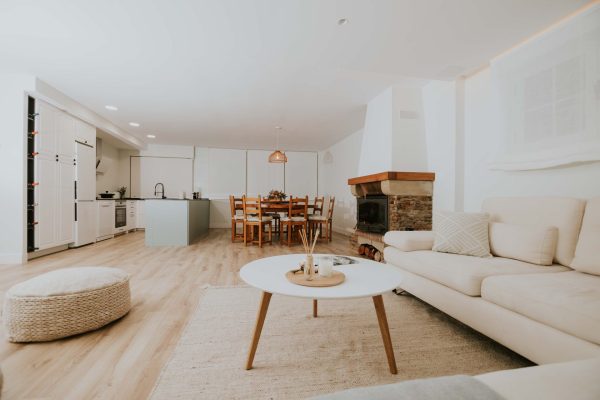
Before continuing on your way you can enjoy the gastronomy of La Rioja con disfrutando de una tapa en Tastavin. También te recomendamos Apartamentos Santiago para pasar la noche a los pies de Igleisa de Santiago.
Nearby you will find the Murrieta Fountain from where the street of the same name starts, which you have to walk for more than 1km until after crossing the RAILWAY TRACKS where you end up turning left until you reach the San Miguel Park.
Crossing this landscaped area you come to a tunnel which crosses the ring road and where it begins the greenway leading to the park of La Grajera.
2.2. La grajera un regalo en el Camino a Santiago por La Rioja
The park of La Grajera is a recreational area of 87 hectares full of trees, tables, parks, sources and with a reservoir built in 1883 on a lagoon.
This is an ideal area for rest, eat and replenish water.
You leave the park by a asphalted track.
Once you have passed the turn-off to the golf course, you will start a demanding steep slope that rewards us for our efforts with a magníficas vista dejando atrás la capital riojana.
2.3. Llegada a Navarrete por el Hospital de San Juan de Acre

We walk parallel to the AP68 until we finally cross it on our way to Navarrete, where the first thing we encounter is the ruins of the Pilgrims' Hospital of San Juan de Acre fundado por Doña María Ramírez en 1185. Un lugar que nos habla de la historia que tiene el Camino de Santiago por La Rioja
After crossing the road, you enter Navarrete via Calle de la Cruz, and then take Calle Mayor Baja to the right to go up to the Church of the Assumption.
To leave the town, take Arrabal street and go straight on to San Roque street, where you will soon come across the cemetery which has the façade and windows of the Hospital de San Juan de Acre.
You take the road that winds its way through vines, olive and fruit trees until you reach the Sotes Cooperative, where you cross the road and take an asphalted track parallel to the A12 motorway until you reach the turning leading to the village of Ventosa.


2.4. Ventosa y el Alto de San Antón
The road that takes you to Ventosa enlivens your way with some decorative panels who accompany you to the entrance of the village.
The path does not cross this locality, but continues to turn right along the road until, along a stony path, we head towards the Alto de San Antón.
The climb is easy and pleasant, surrounded by vineyards and scrubland. Once you reach the highest point you enjoy a panoramic view of the Najerilla valleyand Nájera, which is nearby, but from which you are 8.5 km away.
It is time to descend to a pass that crosses the N120further on you come to a nightwatchman, a typical Riojan construction of circular shape that was used by farmers to protect themselves from the inclemency of the weather.
We crossed the Yalde River over a picturesque stone and wooden bridge to a recreational area. Finally we cross the N120 with great caution y entramos en Nájera, sin duda, el lugar con más historia del Camino de Santiago por La Rioja.
2.5. Nájera tierra de reyes y el Monasterio de Santa María la Real
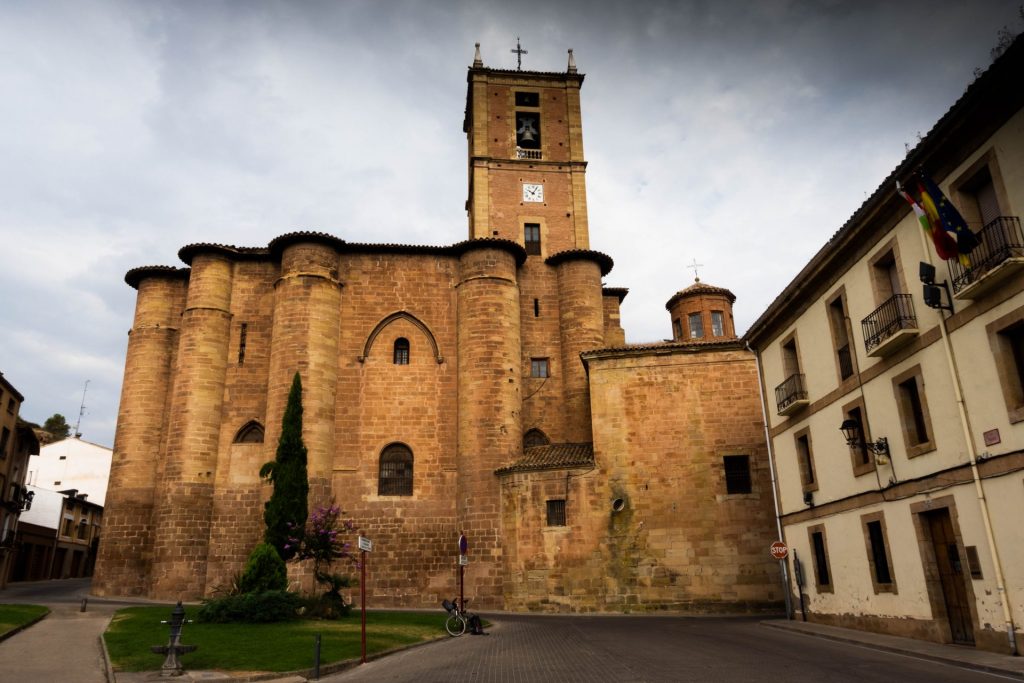
In Nájera you have to walk along Avenida de Logroño and Calle San Fernando to crossing the river Najerilla.
The Calle del Mercado leads to the Monastery of Santa María la Real a real jewel on the road that reminds us that Nájera was the capital of the Kingdom of Navarre from 923 to 1076.
In 1044 the King of Navarre, García Sánchez III, found a small chapel with the Virgin, a bouquet of lilies, a lamp and a bell. Due to the triumphs in successive wars, he ordered the construction of a new chapel. the primitive temple to the Virgin of the Cave which opens in 1052.
The present church was built between 1422 and 1453 and the cloister of the knights was built between 1517 and 1528.
The list of historical figures buried in the monastery more than thirty, most of them belonging to royalty.


2.6. Azofra un pueblo en el Camino de Santiago por La Rioja
The path continues along Calle Costanilla and you leave Nájera on a clayey track until 3.5km later when you reach a asphalted track which leads you to the village of Azofra.
You cross Azofra along the main street where the available services are located and you should know that 9.5km separates you of the nearby town of Cirueña.
At the exit of Azofra you drive along a short stretch of road until you reach the source of the Romerosturn off to the left. After a kilometre you come to a small mid-16th century pillory.
2.7. Zona de descanso en Cirueña
Further on you must cross the Alesanco road, and then you come to a long slope after which you reach a rest area.
Already close to Cirueña the first thing you come across is the golf club and a residential area.
Without actually entering Cirueña you walk along Barrio Bajero street, and once you have left the town behind, you can see the next destination in the distance, Santo Domingo de la Calzada.
2.8. Santo Domingo de la Calzada un pueblo al servicio del Camino de Santiago
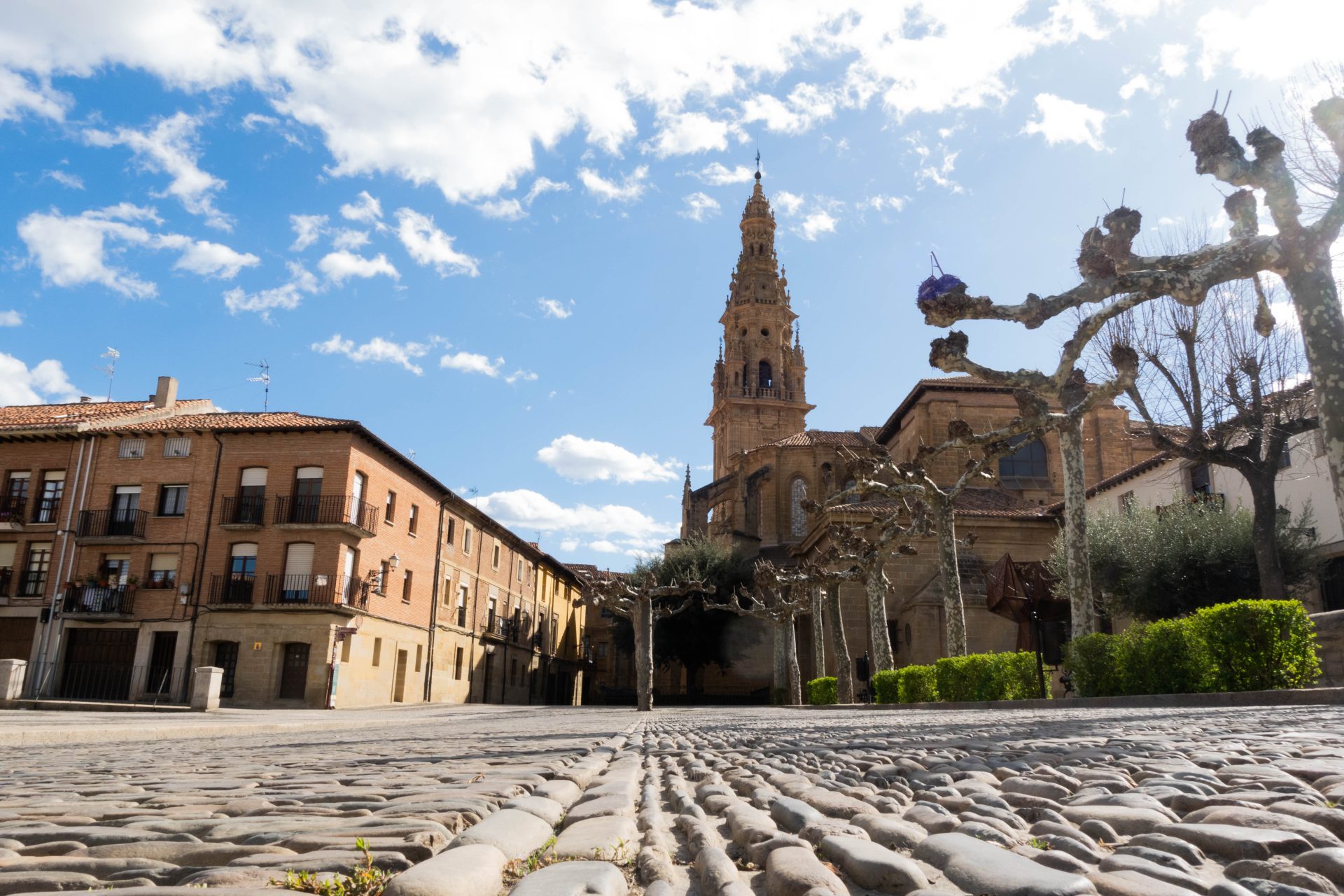
Santo Domingo de la Calzada can be reached by an industrial zone, and next to the road, you come to the Calle 12 de Mayo and Calle Mayor.
Santo Domingo is a typical village on the Camino de Santiago which is fully serviced and of which the following stand out its cathedral with a free-standing tower.
On the outskirts of the town you will come across the hermitage early 20th century, which provides access to the bridge over the river OjaIt is almost 150 metres long and supported by 16 arches built on top of the original one built by Santo Domingo.
After crossing the bridge take the turning onto the track to cross the LR201.
You continue in parallel to the national road for several kilometres until we turn left and head towards Stagnation, último del Camino de Santiago a su paso por La Rioja.

2.9. Grañón el último pueblo del camino por tierras riojanas

(To reach the Carrasquedo Chapel you must take a detour before reaching Grañón).
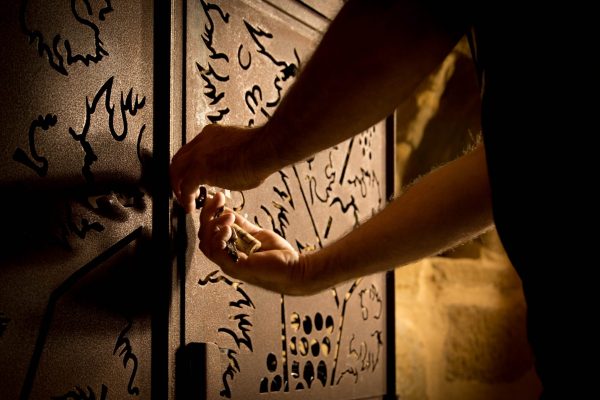
Grañón welcomes you with a mural with road motifsand further on, you come across the Church of San Juan Bautista.
Crosses the village along the main street and you abandon it from a fantastic viewpoint that shows you the path you are going to take in order to leaving the lands of La Rioja 2km further on.
3. Los orígenes del Camino de Santiago Francés
When the remains of St. James the Apostle were discovered in the year 813, the King of Asturias Alfonso II El Casto was the first to make the pilgrimage to what is now Santiago de Compostela.
Since then millions of people have approached the tomb of the Apostle on pilgrimage. A pilgrimage that begins in each person's home and ends in Santiago.
However, since 1993, what we know today as the French Way of Saint James has been registered as a UNESCO World Heritage Site for its extraordinary cultural, artistic and scenic wealth.
This creates a difference between "Camino a Santiago" which includes any route that takes you to Santiago de Compostela, and "Camino de Santiago" which refers to this UNESCO inscribed route.
4. Santiago el Mayor, Santiago de Zebedeo, Santiago Apóstol o Santiago de Compostela
James the Greater or St. James of Zebedee was one of the 12 apostles of Jesus of Nazareth. Born in Bethsaida and being the brother of John, also a disciple of Jesus and the fourth evangelist.
After the death of Christ, James was one of the founders of the early church of Jerusalem, and according to medieval traditions, the northwest territory of the peninsula that is now Spain was assigned to him.
After St. Peter appointed 7 men as bishops with the mission to evangelise Hispania, James returned to Jerusalem to accompany the Virgin Mary on her deathbed.
There he was tortured and beheaded in the year 42 by order of Herod Agrippa I.
Legend has it that they were the 7 men who carried the body of the Apostle to what is today Galicia.
However, it was not until the year 813 when a hermit found under the bush an altar with 3 funerary monuments.
One of them contained a body with its throat slit with head under the arm and a sign reading "Here lies James, son of Zebedee and Salome".
Gracias a este hallazgo hoy podemos disfrutar del Camino de Santiago por La Rioja y visitar estas 8 localidades que lo recorren.
Puedes suscribirte a la newsletter de La Rioja Premium here.