


La guía completa para recorrer toda la Sierra Riojana

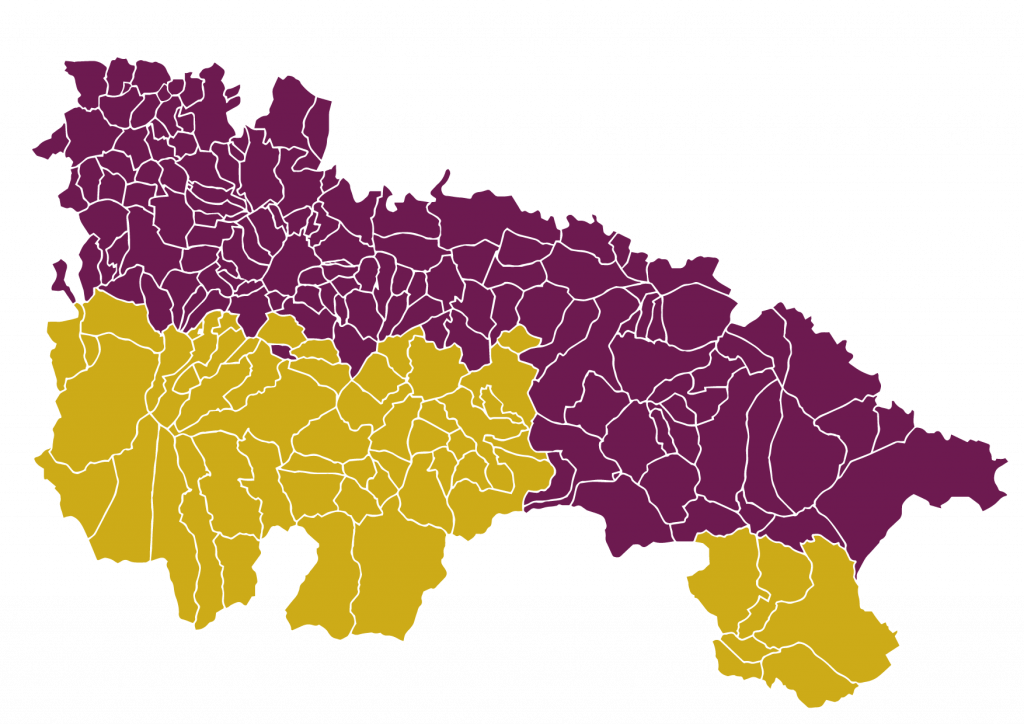
The Sierra Riojana is located in the south of the province y  comprende una extensión que va desde la zona más occidental a la más oriental, formando parte de Upper Rioja, La Rioja Media y La Rioja Baja.

In this way, the riojan mountains is divided into:

  • The mountain range of La Rioja Altawhich includes the counties of Ezcaray (upper Oja) and Anguiano (Alto Najerilla).
  • Tierra de Cameros, o simplemente, Los Cameros, en La Rioja Media which includes Camero Nuevo y Camero Viejo.
  • The region of Cervera perteneciente a Lower Rioja.

In total the Sierra Riojana is home to about 13,600 inhabitants siendo la región menos poblada de la Comunidad Autónoma.

La Sierra de la rioja mapa

DESCUBRE LA RIOJA PREMIUM

GUÍA PARA DESCUBRIR LA SIERRA DE LA RIOJA

1. QUE VER EN LAS COMARCAS DE EZCARAY Y ANGUIANO | LA SIERRA DE LA RIOJA ALTA

In this area of the Riojan mountain range nature and heritage merge offering visitors a cultural and scenic wealth that leaves no one indifferent.

1.1. Monasterios de Yuso y Suso en San Millán de la Cogolla

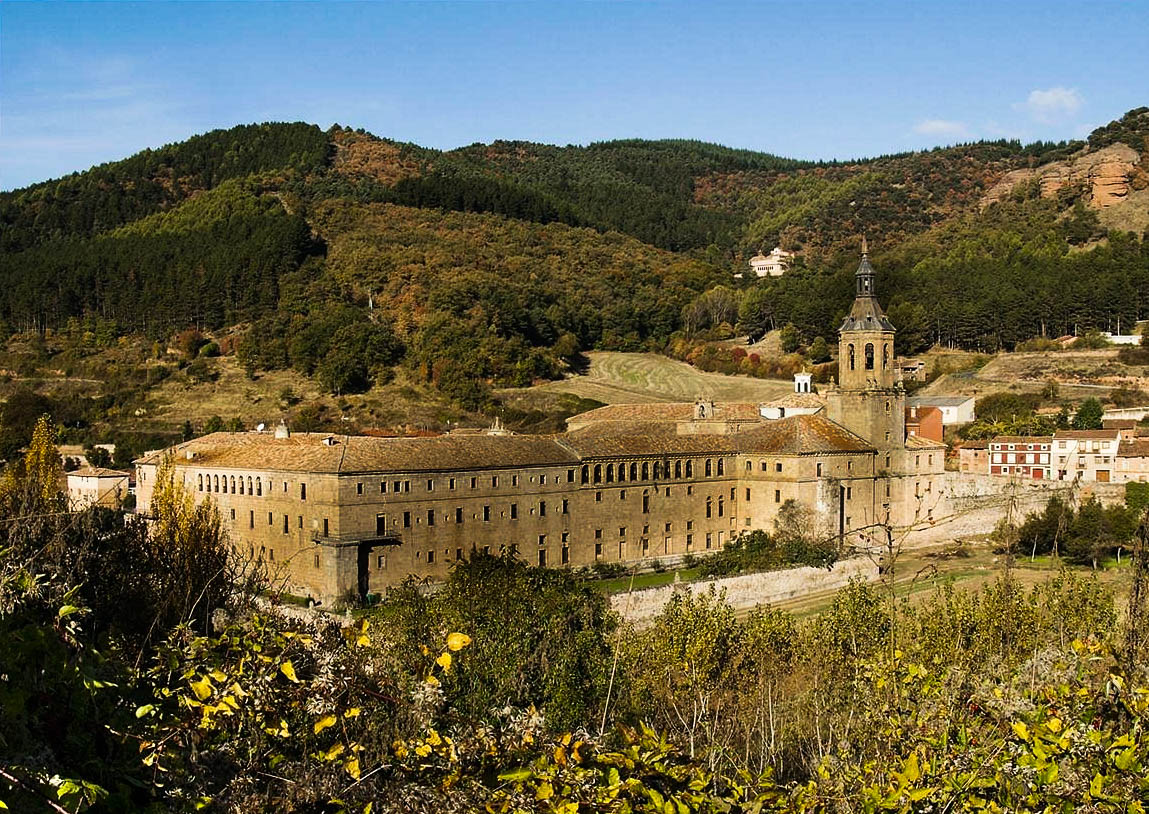
Monasterio de Yuso

The Monasteries of Suso and Yuso have been declared World Heritage by UNESCO in 1997, for historical, artistic, religious, linguistic and literary reasons.

The Monastery of Suso is the older of the two, built at the end of the 6th century from the cave where the the hermit Saint Millan died in 574.

It was in this monastery where a monk wrote the Emilian GlossesThe first annotations in the margins of the pages are written in Latin. These annotations were written in the Romance language and the first annotations written in Basque also appear, which is why they are considered to be in the Basque language. cradle of Castilian and Basque.

Gonzalo de Berceo, the first poet to be known in Castilian, also lived in this monastery.

In the "portaliello" of the Monastery of Suso, you can also find the sarcophagi of the Seven Infantes de Lara.

For its part, the Monastery of Yuso The largest of its kind was ordered to be built in 1053 by King García Sánchez III of Navarre "he of Nájera".

The history of its foundation is linked to the legend which tells that when Millán died, his disciples buried him in his cave, and the Monastery of Suso grew up around it. However, the Navarrese King García III wanted to take the mortal remains of the Saint to his recently founded Monastery of Santa María La Real. Thus, the 29 May 1053They placed the remains of the saint in an ox-drawn cart and set out on their journey, leaving the monks who lived there desolate. However, when they reached the plain, the oxen stopped and refused to walk again. There was no way to force them. The king and the whole retinue interpreted this as a miracle, that San Millán was imposing his will on the monks. to be reburied there. It was then that the king ordered the construction of the new monastery, which was called Yuso (below), as opposed to the one above (Suso).

1.2. Monasterio de Valvanera en Anguiano

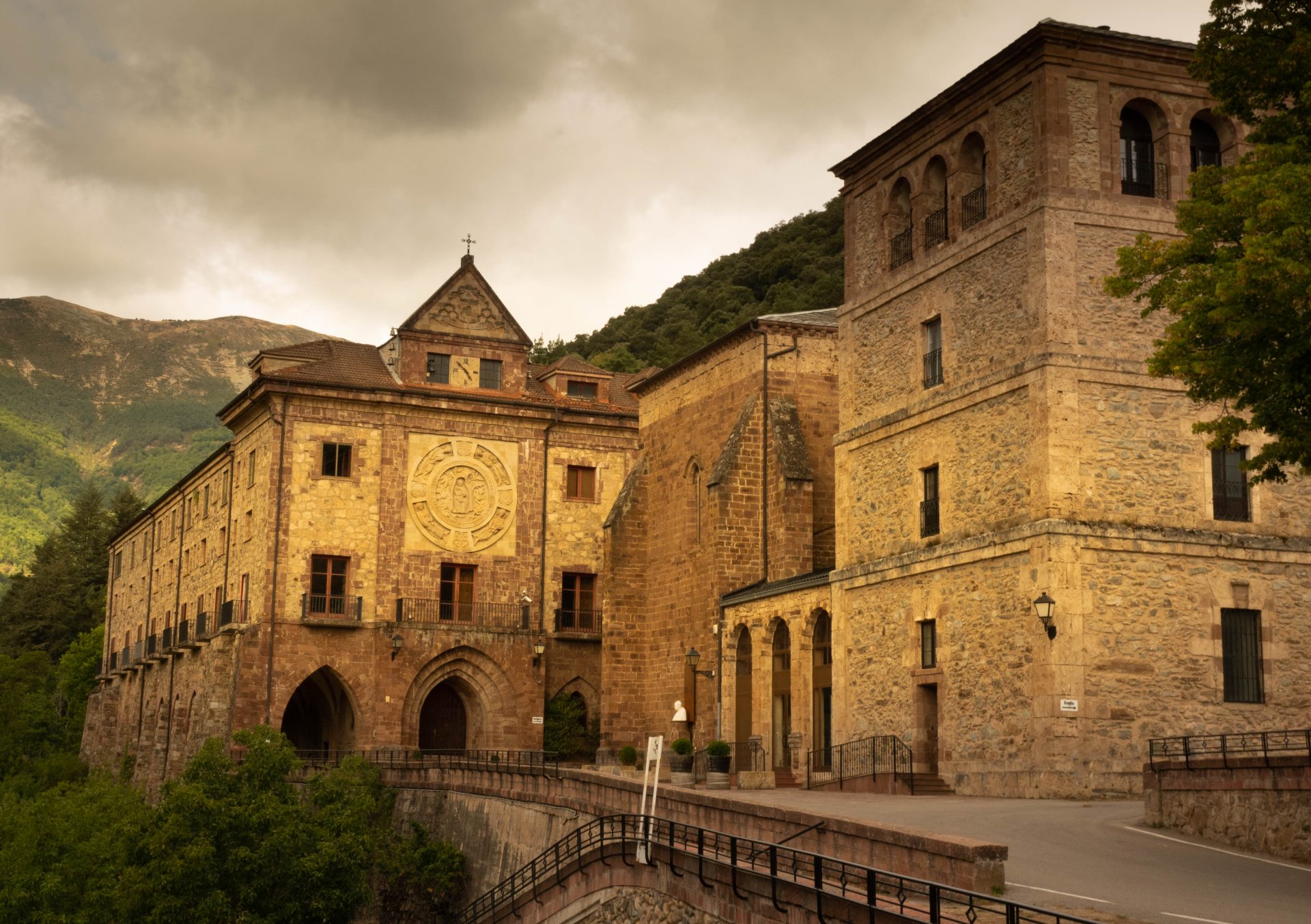
Monasterio de Valvanera

The Monastery of Valvanera is located in in the middle of nature at an altitude of 1000 metres above sea level. Valvanera being the Patron Saint of La Rioja.

The first Abbot of the Monastery was Don Sancho in 990.

Between 1835 and 1883 the monastery was abandoned as a consequence of the disentailment of Mendizábal.

Every year on the last Saturday in April, the The Valvanerada a march that leaves Logroño at 8 p.m. and covers the 63.2 km that separate the city from the Monastery with a participation of between 1,000 and 2,500 people.

1.3. Embalse de Mansilla y Ruinas del Antiguo Pueblo bajo las aguas

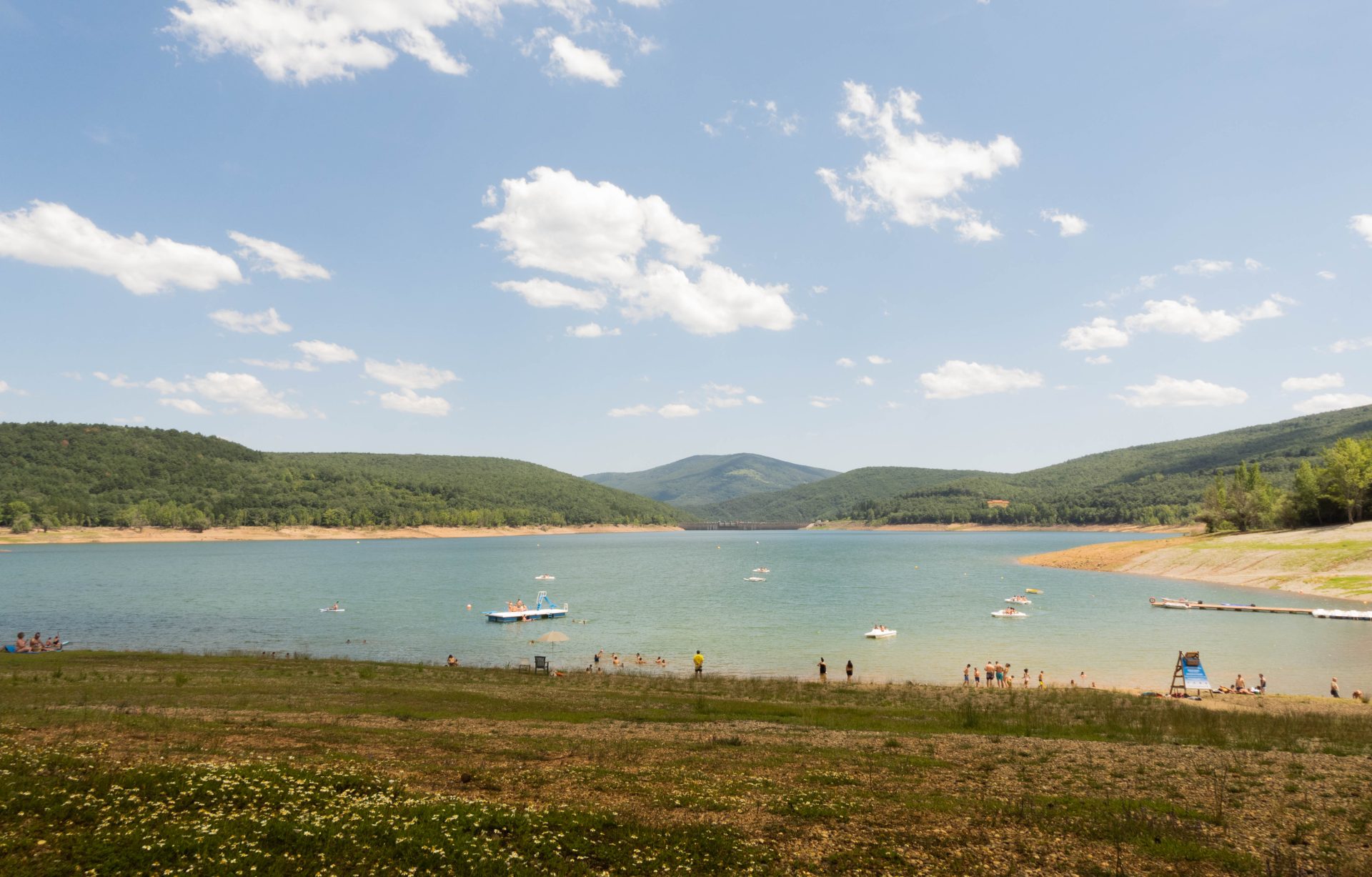
Pantano de Mansilla

The Mansilla reservoir hidden beneath its waters is the old town of Mansilla de la Sierra which was flooded in 1959 and its inhabitants had to settle in the village known today as Mansilla de la Sierra, some 300 metres from the reservoir.

The best time to visit is from the end of August to October when the waters are at their lowest and the church tower and some of the buildings of the old village can be seen.

The reservoir is fed by the waters of the rivers Najerilla, Gatón and Portilla.

1.4. Ezcaray conjunto arquitectónico popular

Ezcaray posee uno de los sets of popular architecture most interesting of La Rioja. With mainly three-storey houses where the ground floor was used as a stable for the livestock, the second as a dwelling and the third as a store for fodder, crops, etc.

Around Ezcaray you will find several villages many of them depopulated.

Además, Ezcaray posee un gran natural heritage being the first municipality in La Rioja in terms of forested area.

1.5. Canales de la Sierra conjunto histórico

Canales de la Sierra is located at an altitude of over 1,000 metres above sea level and has been registered as an Asset of Cultural Interest in the category of Historic Site as it has a rich and well cared for heritage There are two churches inside the village: Santa María and San Cristóbal, a hermitage of San Antonio, and outside the village there are two other hermitages: San Juan de Mata and La Soledad.

1.6. Pico San Lorenzo, el techo de La Rioja

The Peak San Lorenzo is the highest in all of La Rioja at 2,271 m above sea level and the second highest in the Sierra de la Demanda after Moncayo.

To reach the top of this peak you can do the following from the ski resort car park which can be found at the foot of the hill, or if you prefer something lighter from the pass of the Tres Fuentes on a linear route of 4.5 km in total.

1.7. Salto del Agua en Matute

The path of the Salto del Agua de Matute starts in the village of Matute and it is a 3 km long route of great scenic beauty which ends at the waterfall itself, a small waterfall with great charm.

2. TIERRA DE CAMEROS NATURALEZA EN ESTADO PURO

The Cameros is an area brimming with history and nature. It is the ideal place to relax, enjoy the forests, mountains and rivers, and learn more about how past generations lived.

2.1. Pantano del Rasillo en La Rioja

Pantano de El Rasillo

El Embalse González Lacasa se encuentra en plena Sierra Riojana de Camero Nuevo con acceso desde los pueblos de El Rasillo y Ortigosa de Cameros. Contando con club náutico abierto durante los meses de verano.

El Pantano de El Rasillo goza de un entorno privilegiado en plena naturaleza con un fabuloso pinar que cobija del sol a los bañistas y paseantes.

¿Quién dijo que La Rioja no cuenta con turismo azul? Lo tenemos y el Embalse González Lacasa es claro ejemplo de ello.

El lugar perfecto para disfrutar de un día de picnic en grupo, en pareja, con niños o en solitario.

2.2. La Sierra Cebollera, el parque natural de La Rioja

The Cebollera mountain range is the only natural area in La Rioja that has been awarded the distinction of natural park. It is a landscape that has recovered, after centuries of intense transhumance activity, extensive natural forests of Scots pine, beech and oak, with outstanding ecological and scenic values in the course of mountain streams, with waterfalls and small waterfalls in a setting of riverside woodland.

The natural park covers an area of 23,640 hectares, but if we take into account the whole of the Sierra de Cebollera, its surface area is 106,934 hectares.

The Sierra de Cebollera is a privileged geological enclave within the Iberian System, due to the glacial formations, the "pits", at altitudes above 2,000 metres, such as the peak of Peña Cebollera.

In Villoslada de Cameros, you will find the Interpretation Centre of the natural park.

2.3. El Mirador del Cañón del río Leza en La Rioja

Cañón del Rio Leza

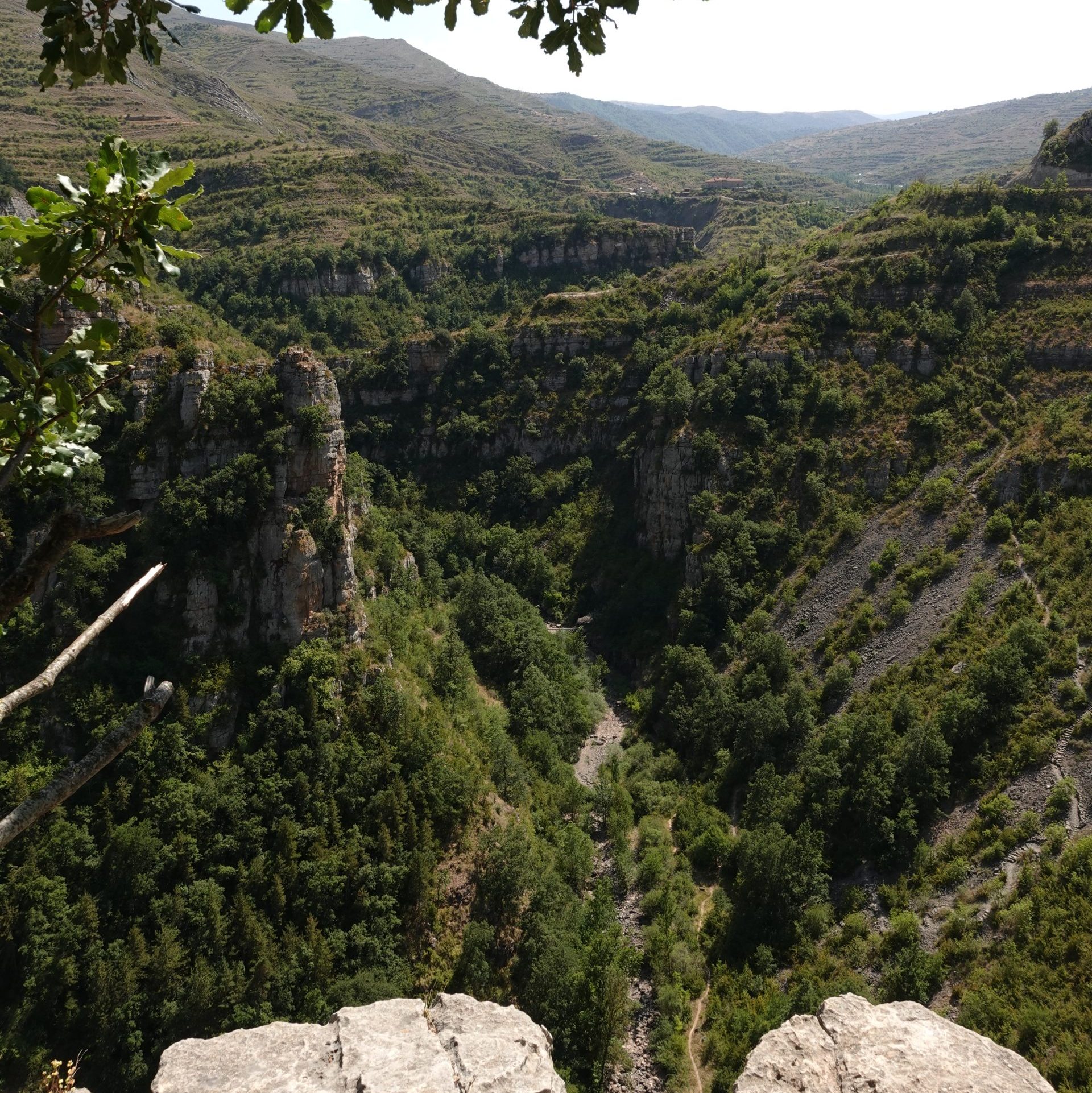
The viewpoint of the Leza river canyon offers some of the best views of the breathtaking views of the river Leza with vertical walls of up to 200 metres.

It is located on the banks of the LR-250 between the towns of Leza de Río Leza and Soto en Cameros.

Si eres de los que disfrutan de unas buenas vistas y de los que se dejan maravillar por la grandeza de nuestra tierra, en el mirador encontrarás rincones donde contemplar sin prisa la fuerza de la naturaleza representada en este espectacular cañón.

Nos encontramos en la comarca conocida como Camero Viejo.

2.4. El Chorrón de Viguera

Chorrón de Viguera

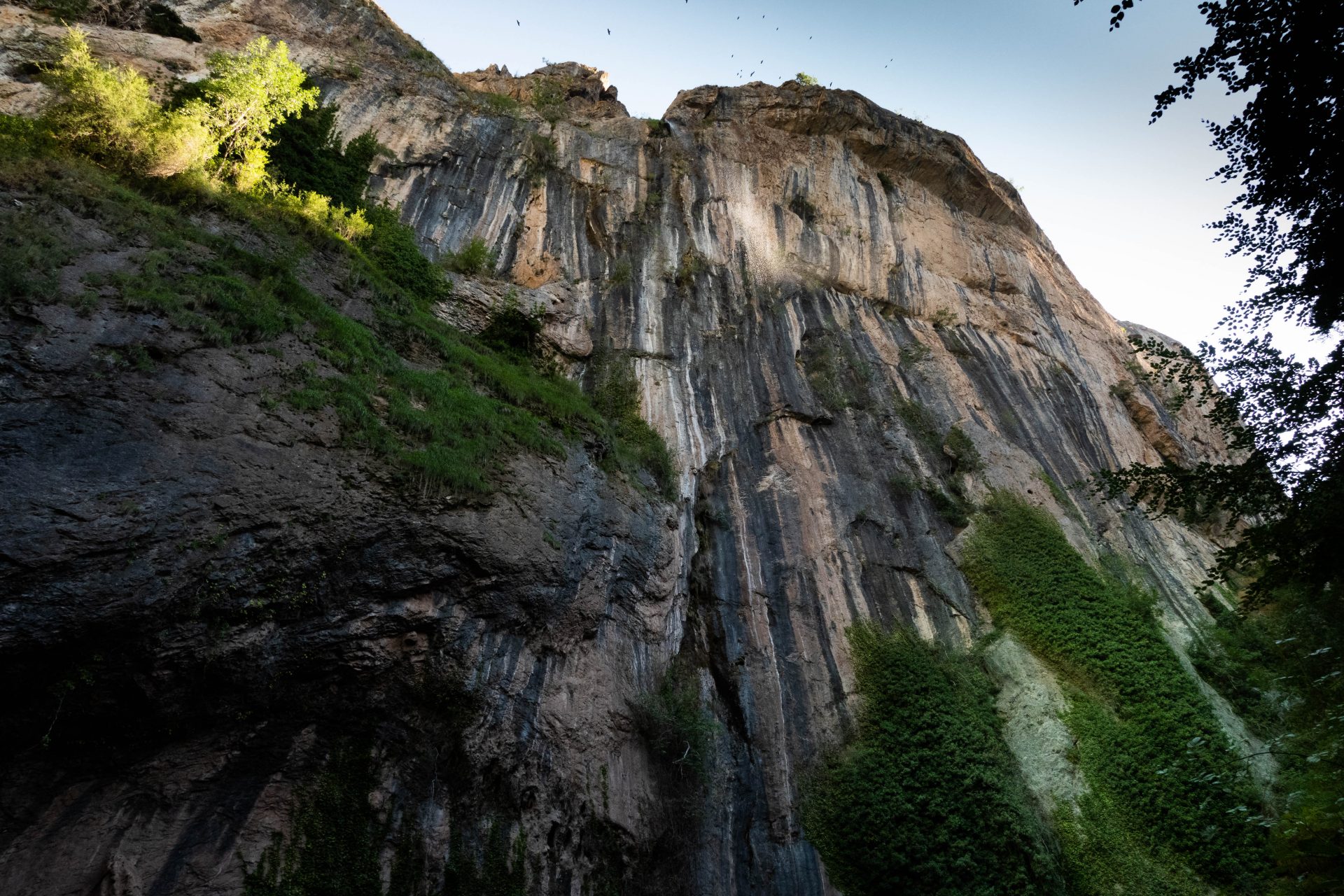
The Chorrón de Viguera has 60 metres high being the highest waterfall in La Rioja.

Leaving the village of Viguera on the left, take a track that leads you to a parking area. The walking route starts next to a picnic area.

*The photograph was taken in the dry summer of 2022, when only a trickle of water was falling, inviting you to take a shower. At any other time of the year the Chorrón lives up to its name.

2.5. Ermita de San Esteban en Viguera

The Ermita de San Esteban de Viguera es una construcción románica ubicada en el lado opuesto del pueblo con respecto a la carretera bajo unas pintoerscas peñas.

Se pueden recoger las llaves en el pueblo para ver la ermita por dentro.

Desde la carretera comienza el sendero que asciende de forma exigente por la ladera. El itinerario está marcado y lleva entre 20 y 30 minutos recorrerlo.

2.6. Castillo Cueva en Castañares de las Cuevas

Castillo Cueva en La Rioja

Sin movernos del entorno de Viguera y apenas unos metros más adelante de la ermita de San Esteban nos encontramos con Castañares de las Cuevas y su castillo.

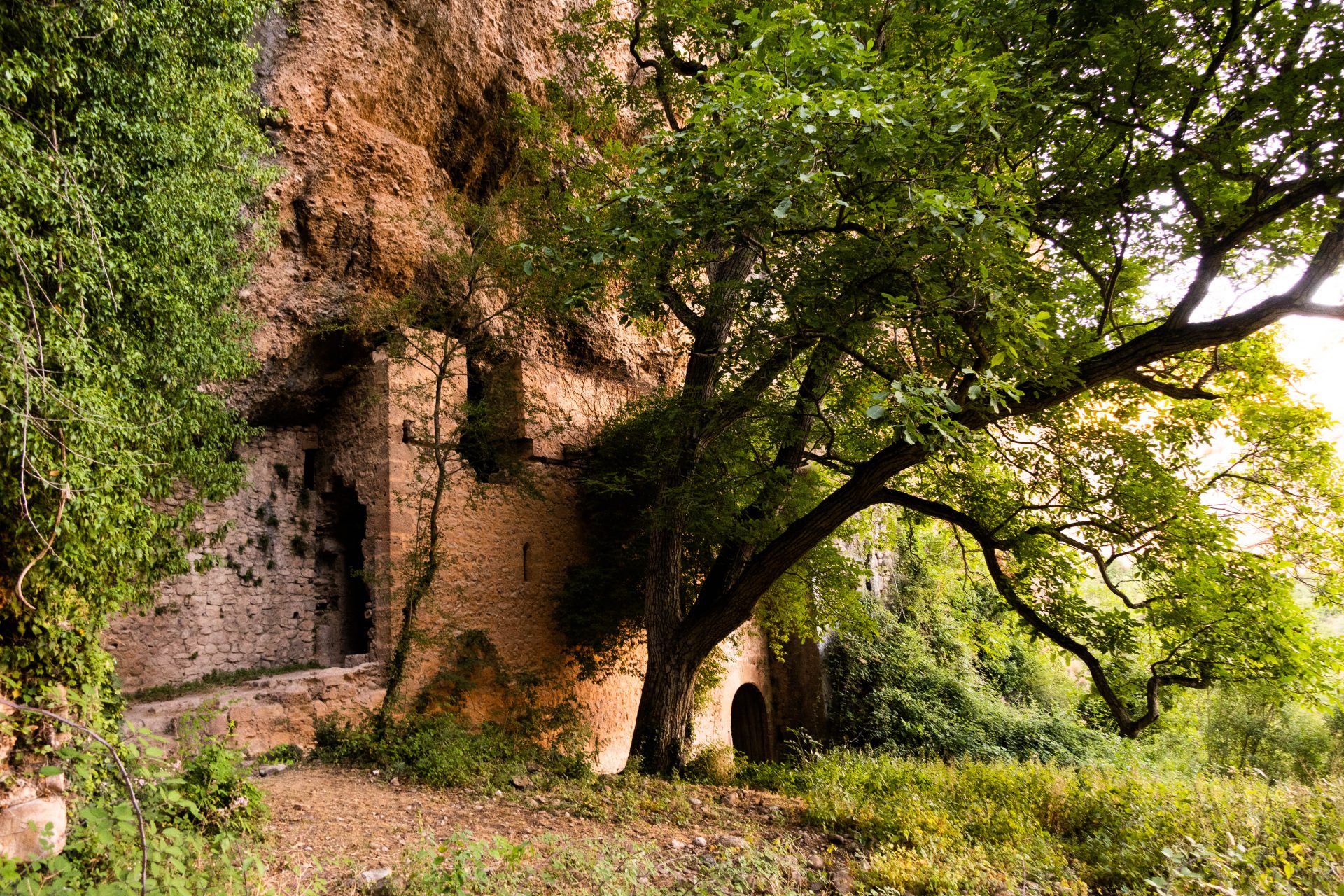
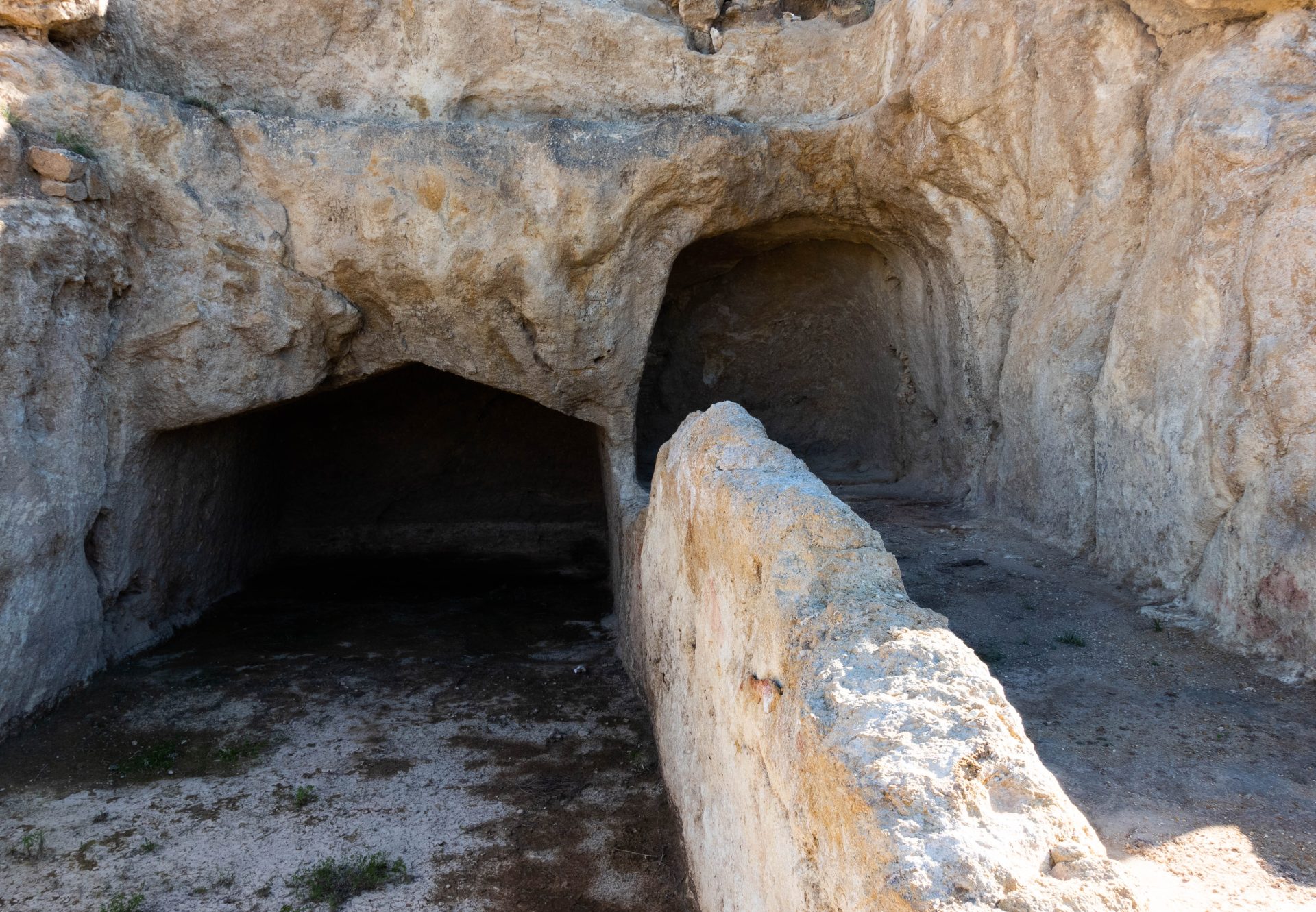
This cave castle is part of a cave complex which has been used since ancient times.

The the plan of the castle is irregular and fits in with the layout of the rock and the existing natural caves that enclose its walls. At present, it is impossible to know the interior layout of the complex, as there are no dividing walls except for a short wall in the first enclosure.

Built in masonry porous limestone and river pebbles were used. It consisted of three floors, now lost, judging by the existing windows. The keep had a door leading to the first floor, which communicates with the surrounding cave dwellings on the outside, and another door probably leading to the interior of the fort.

You can access through a private estate with horses.

En este post puedes descubrir todos los castillos y fortalezas de La Rioja.

2.7. Puente de hierro y Viaducto de San Martín en Ortigosa de Cameros

The municipality of Ortigosa has two bridges spanning a 50-metre ravine depth.

The first to be built was the iron bridge in 1910 linking the park of Santa Lucia with the caves.

The second was the St Martin viaduct built in single-arched concrete in 1924.

Both bridges offer panoramic views of great beauty.

2.8. Museo Rural Rancho de Esquileo – Transhumancia

The rural museum Rancho de Esquileo of Brieva de Cameros is a cultural space that pays tribute to the figure of the shearer and to the world of transhumance.

It is a former shearing ranch restored in 2006 as a small museum dedicated to this millenary livestock farming activity so present in the area until a few years ago.

3. CERVERA: LA SIERRA DE LA RIOJA BAJA UN LUGAR LLENO DE HISTORIA

The district of Cervera includes the easternmost municipalities of the Sierra de La Rioja.

3.1. Contrebia Leucade la ciudad celtíbera

Contrebia Leucade

Contrebia Leucade is a Celtiberian city from the 3rd century BC that has survived to the present day in an exceptional state of preservation. one of the most important sites on the Peninsula.

This is a site of great historical value as, due to its strategic geographic location, it has been used for two thousand years by different cultures.

The Contrebia Leucade Interpretation Centre is located in Aguilar de Río Alhama, 2.5 km from the site.

3.2. Castillo de Cornago una fortaleza del siglo XIII

Cornago

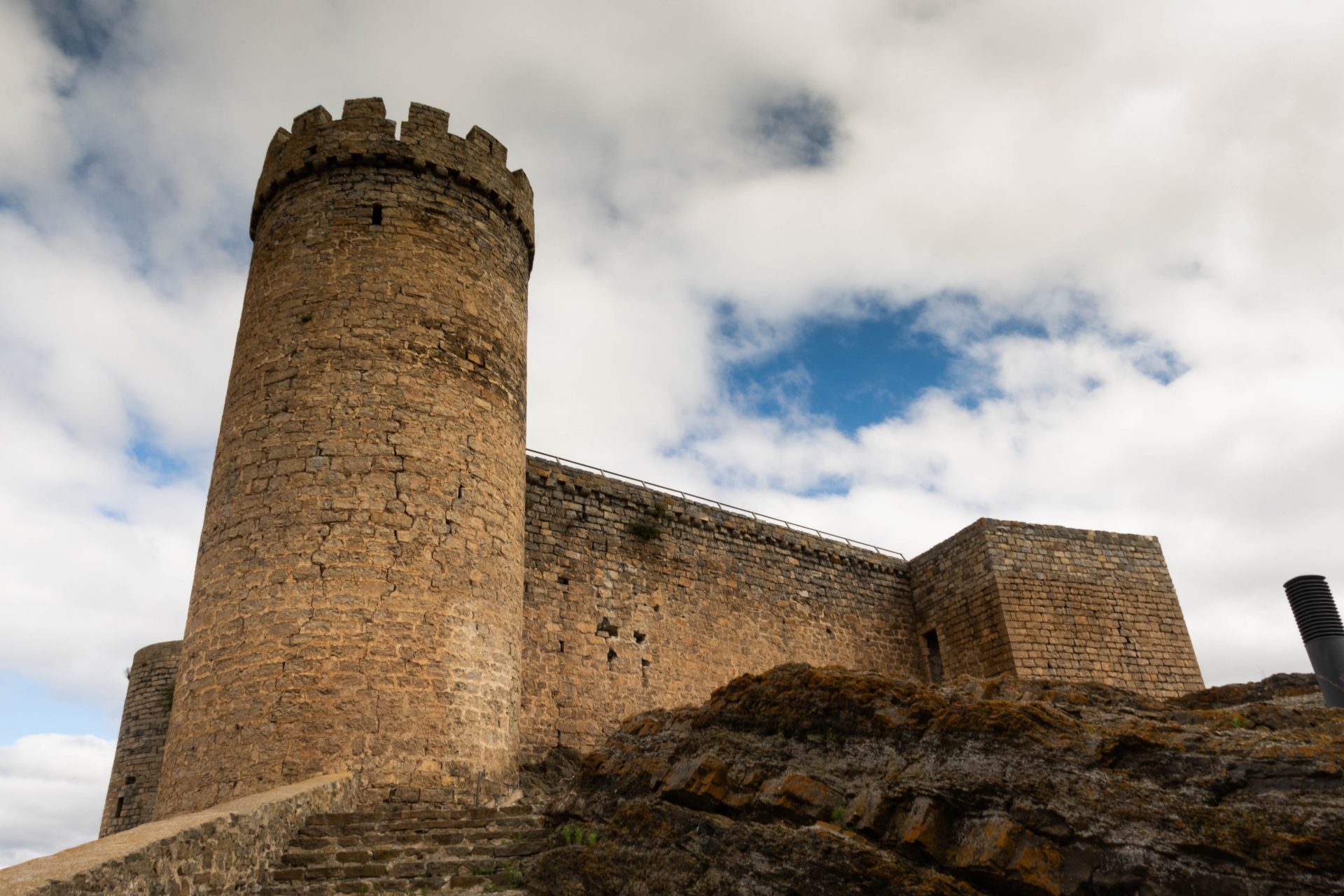
The Cornago Castle was built in the 13th century on an earlier 9th-century fortress. It stood on a border area between the kingdoms of Navarre, Castile and Aragon.

Built in ashlar, it has rectangular plan with a tower at each corner. Three of the towers are cylindrical in shape, although of different dimensions, while the tower to the northeast is square.

The castle was used as a cemetery from the 19th century until the 1980s, when rehabilitation work began.

3.3. Castillo de Cervera de Río Alhama una fortaleza defensiva

The tower of homage was located inside two lines of walls.

Your origin is Muslim Alfonso I the Battler conquered it and it became the guardian of the border between the kingdom of Castile and the kingdom of Navarre and Aragon.

3.4. Palacio del Marques de Casa Torre en Igea

Palacio del marques Igea

Built in 1729with the best Spanish and Italian artistsby the Marquis, a native of Igea, Don Juan José Ovejas y Díez (1682-1732), Governor and Captain General of Arica in Peru, where he made a great fortune.

Seen from their main façade It has four floors, while from the river side it has five. A large staircase, topped by a lavishly decorated dome, provides access to the upper floors. It has a quadrangular floor plan and occupies 500 m2, which gives an idea of the building's solidity and perfect symmetry.

4. RESERVA DE LA BIOSFERA STARTLIGHT - LA LUZ DE LAS ESTRELLAS

Several Riojan municipalities in the Leza, Jubera, Cidacos and Alhama valleys due to their geographical, climatic and landscape homogeneity of high environmental value, they have been declared by the UNESCO World Biosphere Reserve.

An important part of this area is located in the Sierra de la Rioja and it is an ideal place for the astrotourism. In 2012, it became the first natural area in Spain to receive certification as a Starlight Tourist Destination.

5. YACIMIENTOS ICNITAS EN LA SIERRA DE LA RIOJA

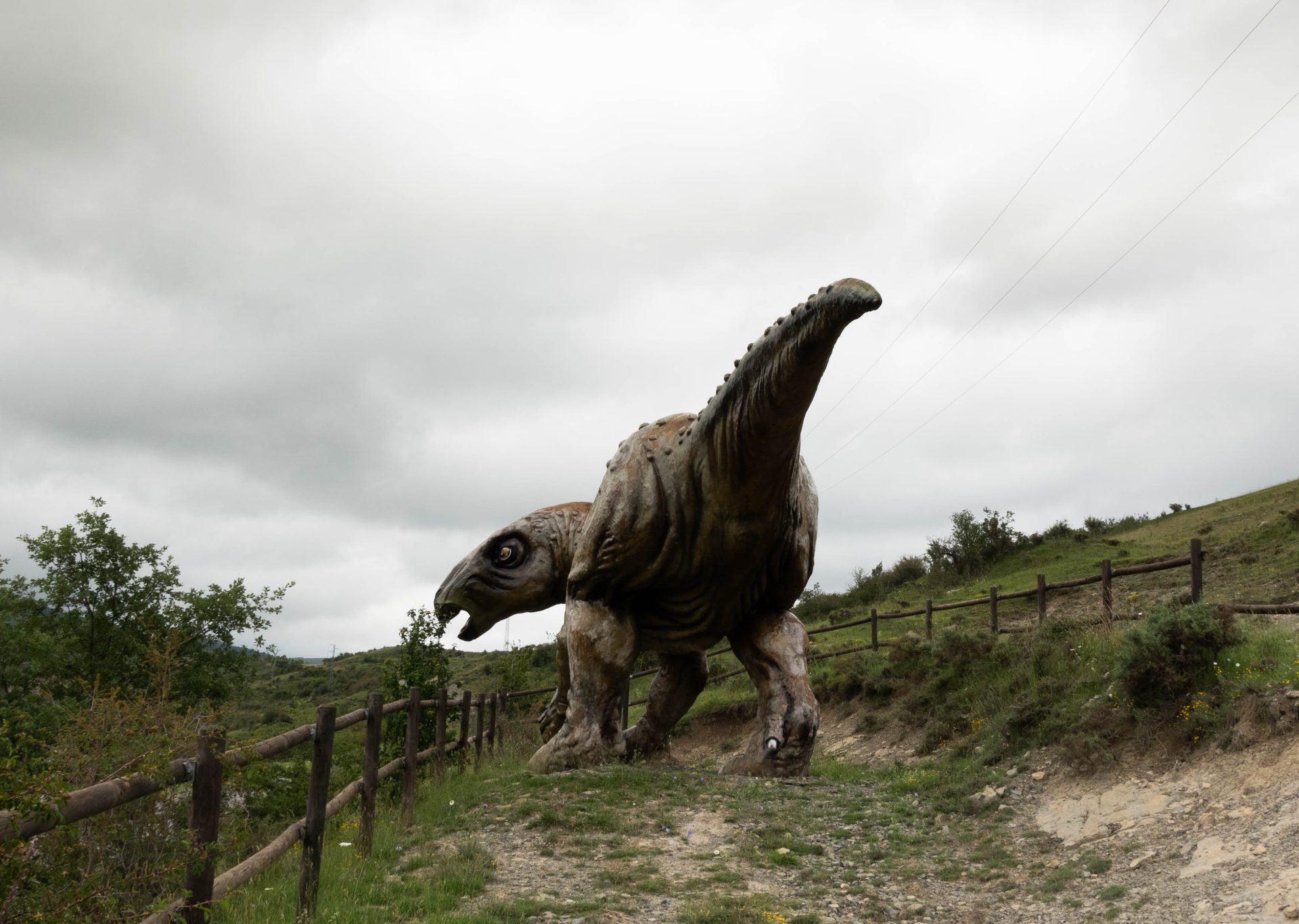
In La Rioja there are several places where these can be seen dinosaur footprints belonging to the period of the Lower Cretaceous. This is because at that time this was a muddy area which, over millions of years and being covered by other sediments, eventually solidified into rocks.

In the mountains of La Rioja you can see these sites at Ajamil de Cameros, Hornillos de Cameros, Muro en Cameros, Soto en Cameros, Terroba, Aguilar de rio Alhama, Cervera de rio Alhama, Cornago e Igea.

Being in Igea on Palaeontological Interpretation Centre of La Rioja.

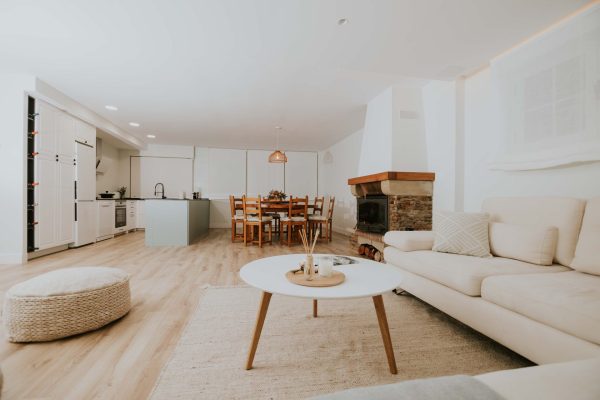
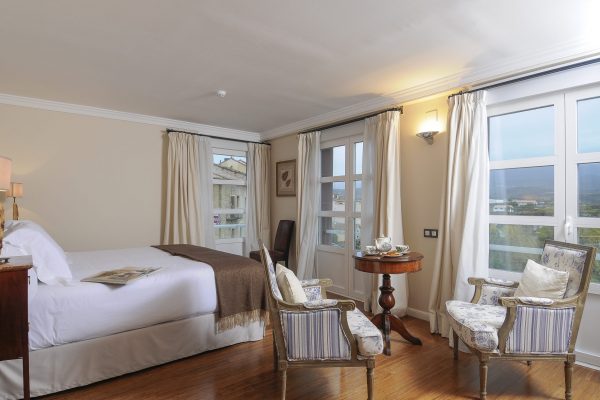
Hotels | rural houses | restaurants | wineries | in the Rioja mountain range

Zone
Zone
Service
Service

Recibe GRATIS la NEWSLETTER semanal y descarga la hoja de ruta para planificar tu escapada

RESPONSIBLEDiana Rebollar.
PURPOSE: send you my new contents and what I see that may be of interest to you (No SPAM)
LEGITIMACY: your consent (that you agree)
TARGETThe data you provide to me will be located on the servers of MailChimp (lariojapremium.com's email marketing provider) outside the EU in the USA. MailChimp is covered by the EU-US Privacy Shield agreement, approved by the European Data Protection Committee.
RIGHTSYou have the right, among others, to access, rectify, limit and delete your data.