


Guía completa para conocer todos los rincones de La Rioja Oriental

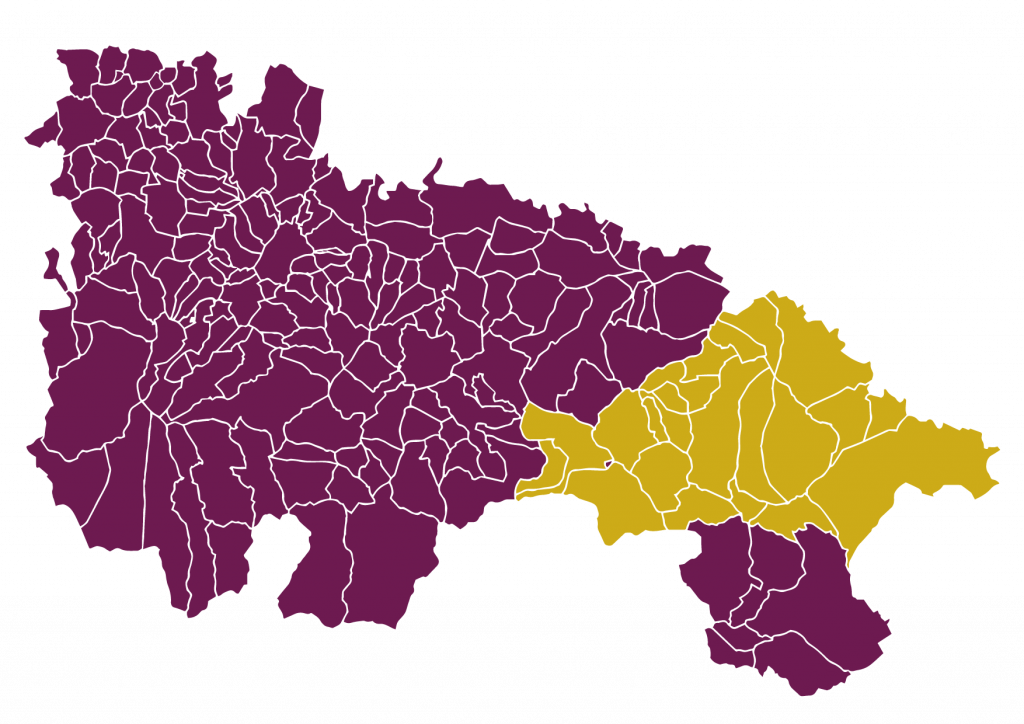
La Rioja Baja is the area easternmost in the region bordering Aragon, Navarre and the province of Soria.

Here you will find Calahorra, the second most populated municipality in La Rioja after Logroño.

Below, you will find a list of the places you can't miss in La Rioja Bajawhich is made up of 22 municipalities in the valley area.

Rioja Baja mapa

Discover the premium rioja

GUÍA PARA DESCUBRIR LA RIOJA ORIENTAL

1. MONUMENTOS QUE NO TE PUEDES PERDER DE LA RIOJA ORIENTAL

La Rioja Baja has a cultural heritage worthy of being visited by locals and visitors alike.

These are some of the monuments not to be missed.

1.1. La Cueva de los Cien Pilares de Arnedo 

Cueva de los 100 pilares La Rioja Baja

La Cueva de los Cien Pilares de Arnedo es en la actualidad el mayor atractivo turístico de la localidad por tener grandísimo valor as a Rock Heritage Site.

It is located in the Cerro San Miguel y se cree que fue la ubicación del old monastery de San Miguel referred to in the will of Sancho Fortún, Lord of Arnedo, in the year 1063.

La visita guiada sale desde la oficina de turismo de Arnedo y tiene un precio de 7€, conviene reservar con tiempo.

La visita comienza con una breve explicación de la iglesia de Santo Tomás Apóstol para continuar caminando hasta La Cueva de los Cien Pilares.

La primera cueva en visitar es el Centro de Interpretación Etnográfico de la Vida en las Cuevas donde podrás descubrir la historia de estas curiosas construcciones utilizadas como vivienda y para fines económicos donde más de 200 familias vivían hasta mediados del siglo XX.

A continuación, se accede a través de una escalera de caracol a lo que sería el antiguo monasterio de San Miguel.

Visita 100% recomendada.

1.2. Monasterio Cisterciense de Vico en Arnedo

Monasterio de Vico

The Cistercian Monastery of Ntra Sra. de Vico is located 4 km from the Rioja town of Arnedo. 1456 by Fray López de Salinas.

Since its foundation and until the disentailment of 1836, the monastery of Vico was a convent Franciscan. After years of looting and deterioration, in 1844 the politician Salustiano de Olózaga bought the building and converted it into a palatial residence. His granddaughter, in 1953, returned it to the Franciscans, who established a seminary.

It is currently inhabited by a community from the Cistercian Order of the Strict Observance (Trappists). It is a Religious Order of the Roman Catholic Church of monks and nuns that has its origins in 1098.

1.3. Catedral de Santa María en Calahorra

Calahorra Cathedral is the Diocesan Headquarters of Calahorra and La Calzada - Logroño.

Built in ashlar masonry in the 15th century of gothic style with baroque façade pioneer in La Rioja with novelties that did not exist before in the region.

The sacristy and the cloister house the diocesan museum which has pieces of great value such as a sacred bible of the 12th century.

Next to the cathedral is the Episcopal Palace.

1.4. Monasterio de San José en Calahorra

The Monastery of San José in Calahorra was founded in 1598 The church was consecrated in 1642.

Currently living Carmelite nuns and you can visit the church any day of the year.

1.5. Colegiata de San Miguel Arcángel de Alfaro

Colegiata San Miguel Alfaro

With 3.000m² it is the largest sanctuary in La Rioja.

Built in brick and of classicist style has two 50-metre twin towers. Its construction began in 1562, but took more than 100 years to complete.

The Collegiate Church of San Miguel has the world's largest stork colony on a building.

1.6. El Picuezo y la Picueza de Autol

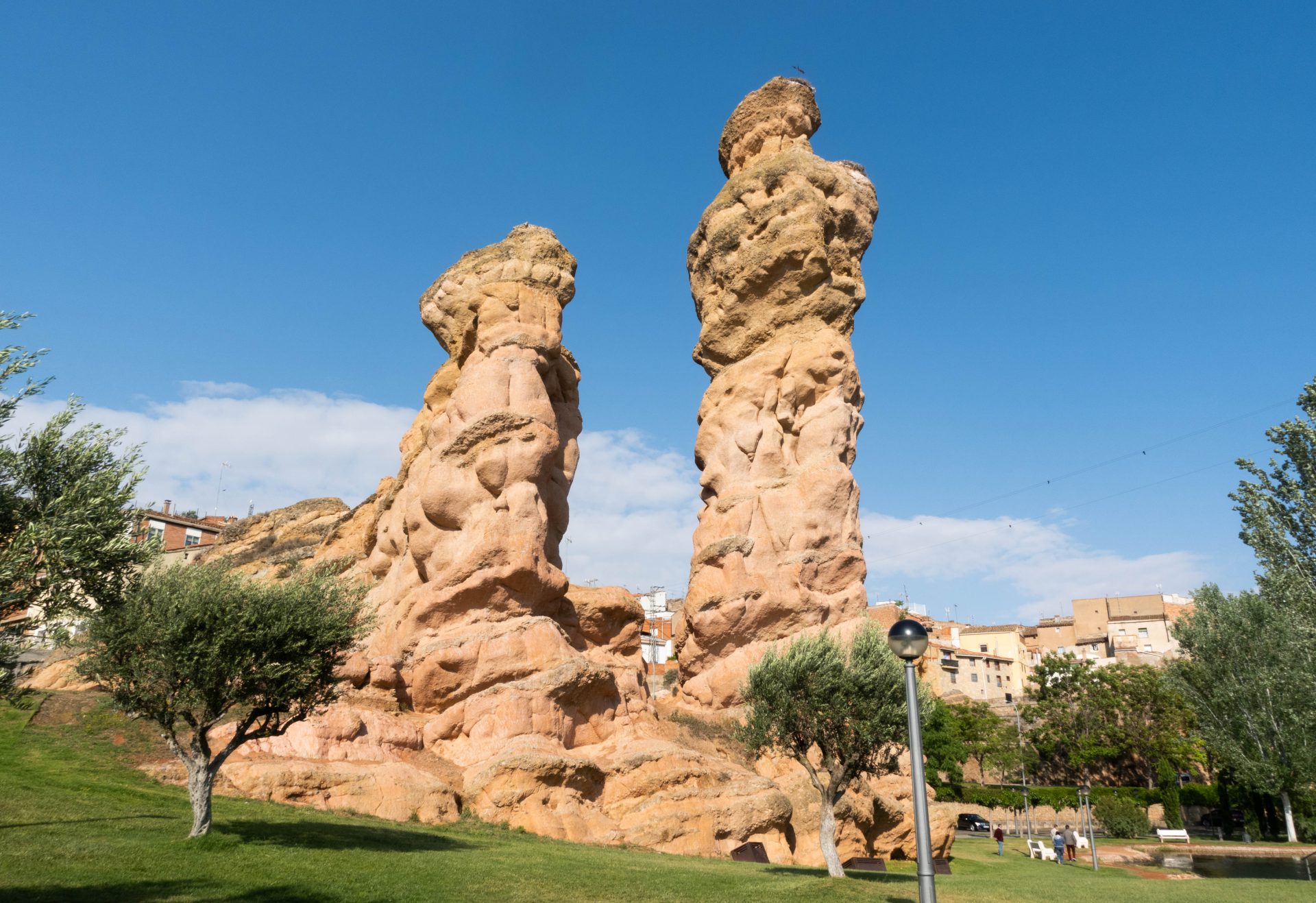
Los picuezos

Los Picuezos han ido transformándose con el tiempo y se alzan como guardianes de los habitantes de Autol.

Maravillas geológicas situadas junto al Río Cidacos y al pie del castillo de la localidad, se trata de dos monolitos rocosos de 45 metros de alto, por unos 10 de diámetro el primero, y unos 30 metros la segunda. Al más alto, se le da el carácter varonil, otorgándole el nombre de Picuezo, y Picueza, por ser más pequeño, a su compañera.

La leyenda más difundida cuenta que el Señor del Castillo poseía una viña que daba exquisitas uvas.

Una noche, el guarda sorprendió a una pareja que ocultaba algo en una cesta; les pidió que lo mostraran, sospechando que eran uvas, a lo que la pareja se negó y tentó al diablo diciendo: “que nos volvamos piedra, si son uvas lo que aquí llevamos”.

The maldición cayó sobre ellos.

1.7. Ninfeo Romano en Alfaro

From when Alfaro was Graccurris in Roman times, the following is preserved Roman nymphaeum, as well as the remains of other constructions such as a bridge, a basin or concrete hearths.

Cuzcurrita de Río Tirón

2. ENCLAVES NATURALES PARA DISFRUTAR DE LA RIOJA ORIENTAL

Nature always finds something to surprise us with and in La Rioja Baja it does so in an amazing way through the Sotos de Alfaro Nature Reserve and the Pools of Arnedillo where you can bathe in hot water in the middle of the river Cidacos.

2.1. Reserva Natural de los Sotos del Ebro en Alfaro

Sotos de Alfaro

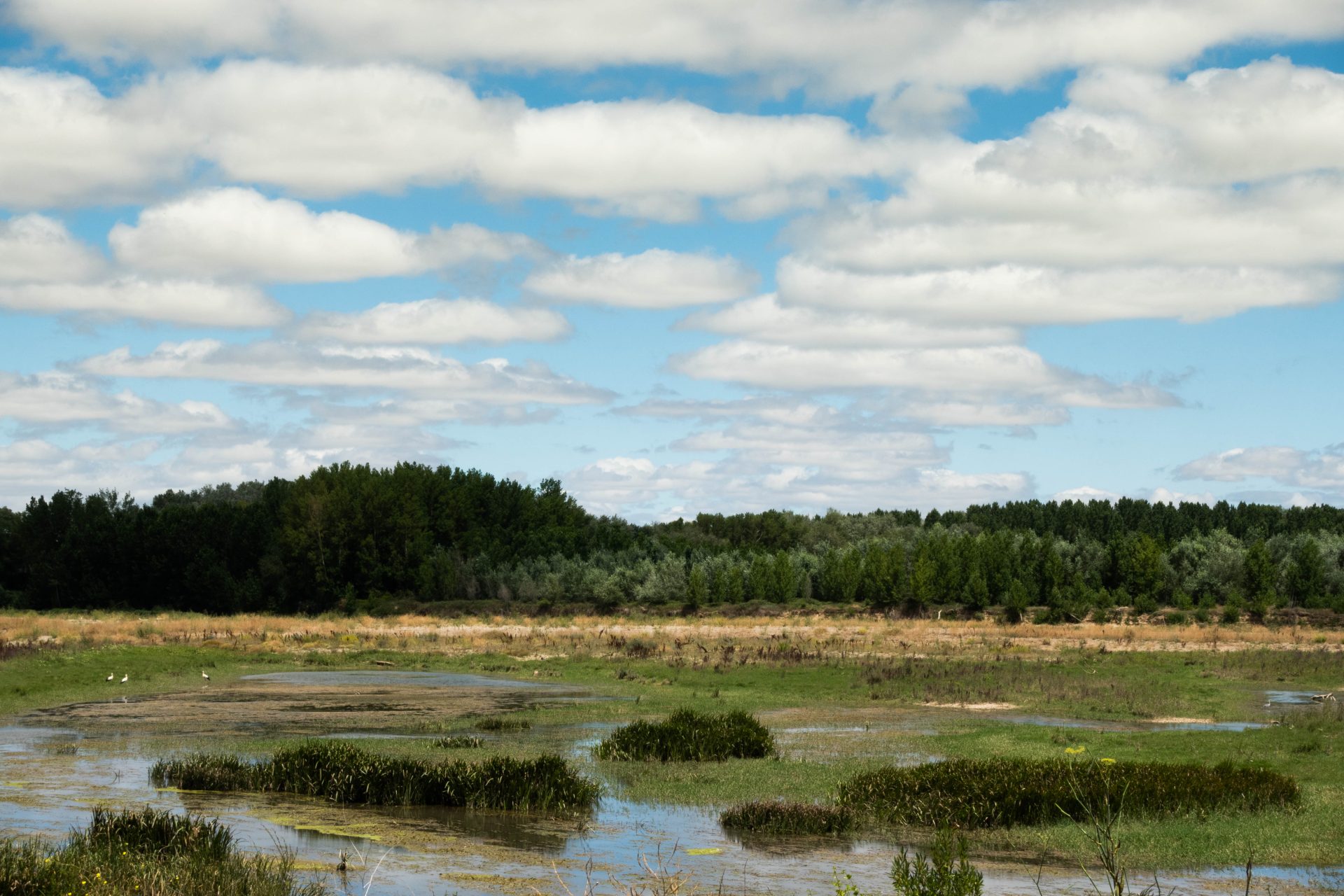
The Sotos de Alfaro are a privileged natural ecosystem from riverine forests poplars, poplars, willows, ashes and alders, and birds The stork predominates, but you can also see herons, cormorants, blackbirds, blackbirds, kites, hoopoes and kingfishers.

The Ebro River runs through this area creating meanders, islands and beaches from which to observe all the beauty of the place.

You can enjoy these spots by exploring their nooks and crannies and relaxing in their recreational area.

2.2. Pozas Termales de Arnedillo

Pozas de Arnedillo

Las Pozas de Arnedillo is a free and conditioned bathing area on the banks of the Cidacos river where water flows from the earth to a temperature of 40ºC and with a flow rate of 1L/s.

The thermal waters of Arnedillo are classified as sodium chloride, calcium sulphate, bromide, with magnesium, iron, silicon, lithium and rubidium ions, and a total mineralisation of approximately 7.66 g/litre, isotonic with respect to blood plasma; hyperthermal and highly radioactive.

Al ser de libre acceso hasta hace poco estaban abiertas las 24 horas del día, en la actualidad se cierran desde las 00:00h hasta las 06:00h.

For those who prefer to bathe in warmer waters, you can look for streams with different temperatures in the middle of the river.

These medicinal waters were already known to the Romans who came to the area through the Roman road linking Calagurris with Numantia.

Cuzcurrita de Río Tirón

3. CASTILLOS EN LA RIOJA ORIENTAL

In La Rioja Baja we find un buen número de castillos which were once of great importance as they were located on the border.

However, today, in most cases, only the ruins of what they once were remain. Visiting them is a journey into the past that will not leave you indifferent.

3.1. Castillo de Arnedo

Castillo de Arnedo

Arnedo Castle was the most important in the area during the Middle Ages, passing from Muslim to Christian hands on several occasions until it was finally conquered by the Christians in the 11th century.

In 2016 and 2018, it was restored and reopened to the public.

En torno al castillo existe una bonita zona de paseo y un mirador con vistas a Arnedo. Sin embargo, el castillo se mantiene cerrado pudiendo visitarse sólo bajo reserva.

3.2. Castillo de Arnedillo

Castillos en La Rioja

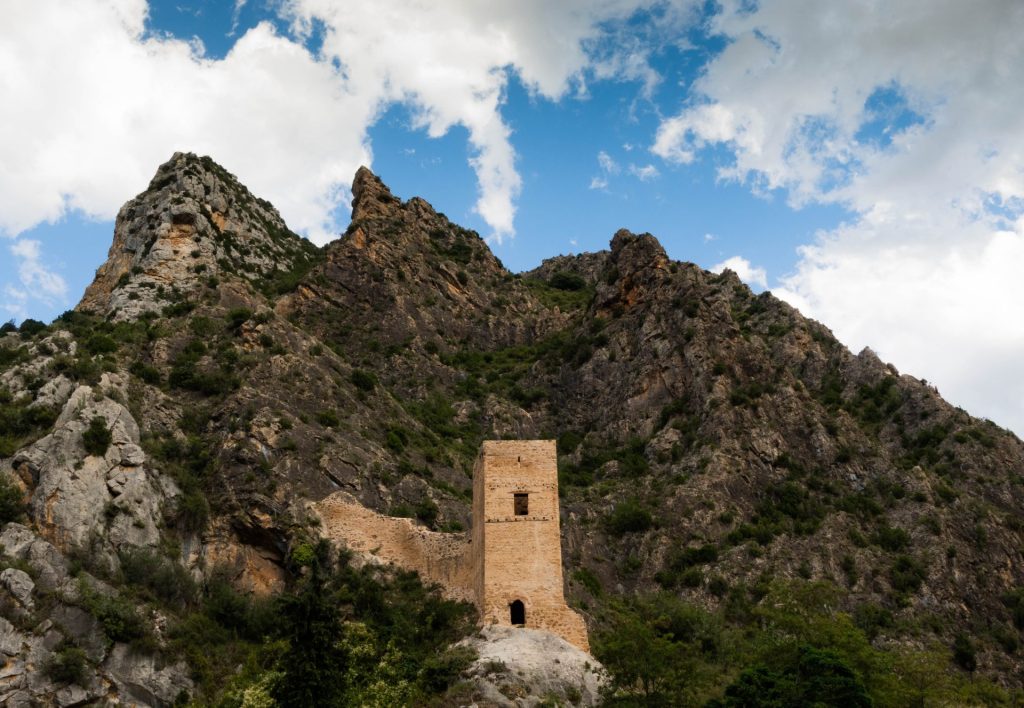
The construction of the Castle of Arnedillo dates back to the 10th century from where the passage between the upper valley of the river Cidacos and Arnedo was watched over, as next to the river is a single-span bridge over which the road between Yanguas and Arnedo ran.

Built in ashlar and masonry, a square tower is preservedThe wall that connects it to the rocks of the mountain and the beginning of another wall.

3.3. Castillo de Prejano

The Prejano Castle consists of a rectangular enclosure and a spectacular pentagonal tower of 15 metres dating from the 15th century.

The fortified enclosure was used as a cemetery until a few years ago.

3.4. Castillo de Quel

Castillo de Quel

The castle of Quel was built in the year 1470 on a hill about 100 metres high.

The castle consists of a main tower and una muralla que puedes recorrer por tu cuenta gracias a la reconstrucción que tuvo lugar en el año 2012.

Junto al castillo se encuentra la imagen de una Virgen, y todo el conjunto ofrece una bonita vista panorámica del pueblo de Quel.

Puedes acceder en coche hasta el propio castillo por un camino de grava.

Si te interesan los castillos en este post encontrarás los castillos y fortalezas de La Rioja.

4. YACIMIENTOS ICNITAS EN LA RIOJA BAJA

centro paleontologico en La Rioja

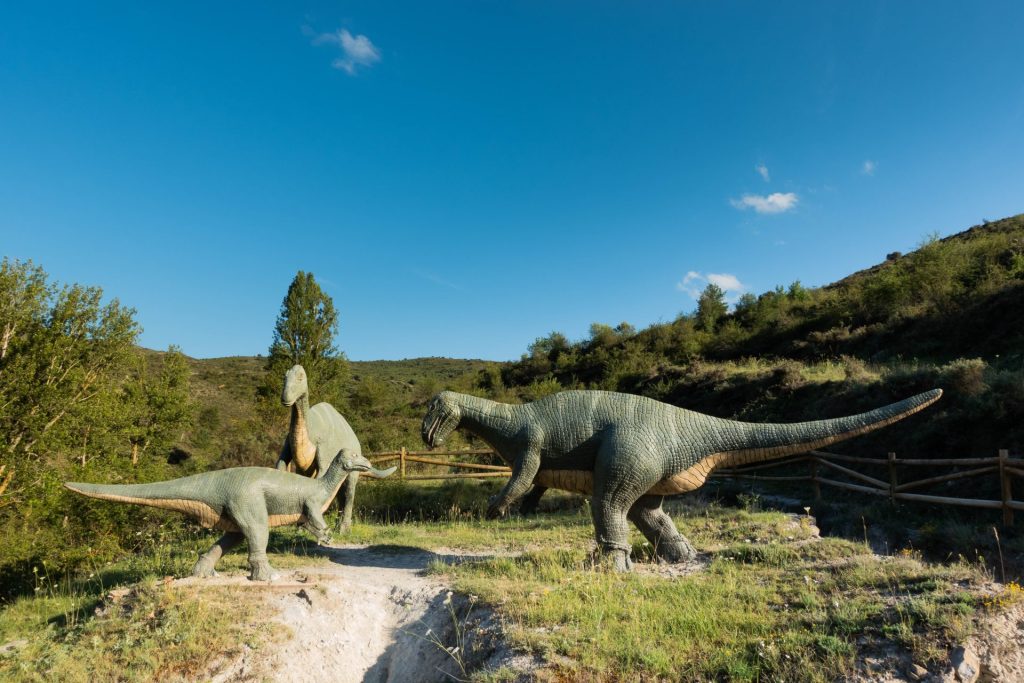
En La Rioja existen varios lugares en los que se pueden divisar hasta 10.000 dinosaur footprints pertenecientes a los periodos de Jurásico Superior (150 millones de años) y Cretácico Inferior (100 millones de años).

Esto se debe a que en aquel tiempo esta zona de La Rioja era una región fangosa que con el paso de millones de años y siendo cubiertas por otros sedimentos se acabaron solidificando en rocas.

In La Rioja Baja you can see these sites at Enciso, Arnedillo, Poyales, Munilla, Muro de Aguas and Prejano.

5. EL CAMINO IGNACIANO A SU PASO POR LA RIOJA ORIENTAL

St. Ignatius of Loyola begins in the year 1521 his pilgrimage route to Jerusalem from his home town Azpeitiain Guipúzcoa, and touring the peninsula. to Manresa. The same road that you can travel today and which passes through the lands of La Rioja.

The Ignatian Way enters La Rioja through Fuenmayor and continues its course to to reach La Rioja Baja via Calahorrathrough Rincón de Soto and Alfaro.

Hotels | rural houses | restaurants | wineries | in the eastern rioja

Zone
Zone
Service
Service

Recibe GRATIS la NEWSLETTER semanal y descarga la hoja de ruta para planificar tu escapada

RESPONSIBLEDiana Rebollar.
PURPOSE: send you my new contents and what I see that may be of interest to you (No SPAM)
LEGITIMACY: your consent (that you agree)
TARGETThe data you provide to me will be located on the servers of MailChimp (lariojapremium.com's email marketing provider) outside the EU in the USA. MailChimp is covered by the EU-US Privacy Shield agreement, approved by the European Data Protection Committee.
RIGHTSYou have the right, among others, to access, rectify, limit and delete your data.