
Due to its strategic position, La Rioja has been for centuries, and depending on the period, a border region between the kingdoms of Navarre, Castile and also Al-Andalus.
Esto provocó que se construyeran numerosas fortalezas y castillos en La Rioja for military purposes to help each side defend its territory.
As a result, today in the 21st century, we can still contemplate a large part of this historical heritage. Although some castles have completely disappeared today, as is the case of the castle of Cellorigo, others have been perfectly restored, as is the case of the castles of Cuzcurrita de Río Tirón, Sajazarra and Agoncillo.
Below, you will find a list de los castillos en La Rioja ordenado alfabéticamente por nombre de la localidad en que se encuentran.
#1 Aguas Mansas Castle in Agoncillo

The Castle of Aguas Mansas was built during the 13th and 14th centuries. It has a rectangular ground plan with square towers at its four corners.
The coat of arms of the Calatrava Cross appears on the façade located on the eastern façade, as a sign of belonging to the House of Medrano.
It has now been fitted out to house the municipal buildings of Agoncillo.
#2 Arnedo Castle

Arnedo Castle was the most important in the area during the Middle Ages, passing from Muslim to Christian hands on several occasions until it was finally conquered by the Christians in the 11th century.
In 2016 and 2018, it was restored and reopened to the public.
En torno al castillo existe una bonita zona de paseo y un mirador con vistas a Arnedo. Sin embargo, el castillo se mantiene cerrado pudiendo visitarse sólo bajo reserva.


#3 Arnedillo Castle

The construction of the Castle of Arnedillo dates back to the 10th century from where the passage between the upper valley of the river Cidacos and Arnedo was watched over, as next to the river is a single-span bridge over which the road between Yanguas and Arnedo ran.
Built in ashlar and masonry, a square tower is preservedThe wall that connects it to the rocks of the mountain and the beginning of another wall.
#4 Castillo de Autol (ruinas)
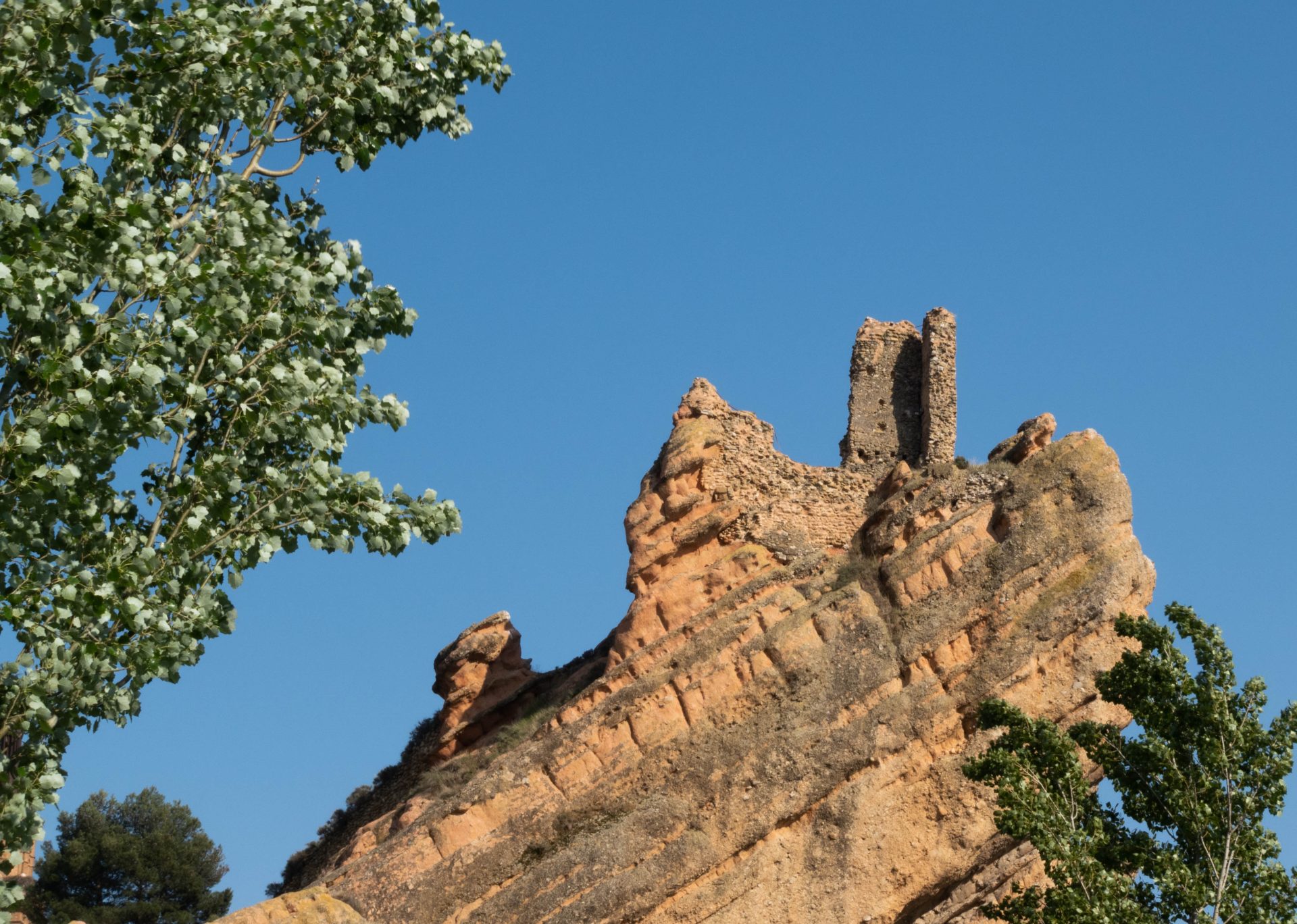
Desde el parque de Los Picuezos se observa a lo alto lo que son las ruinas del castillo de Autol construido sobre una roca.
#5 Fortaleza de Briones
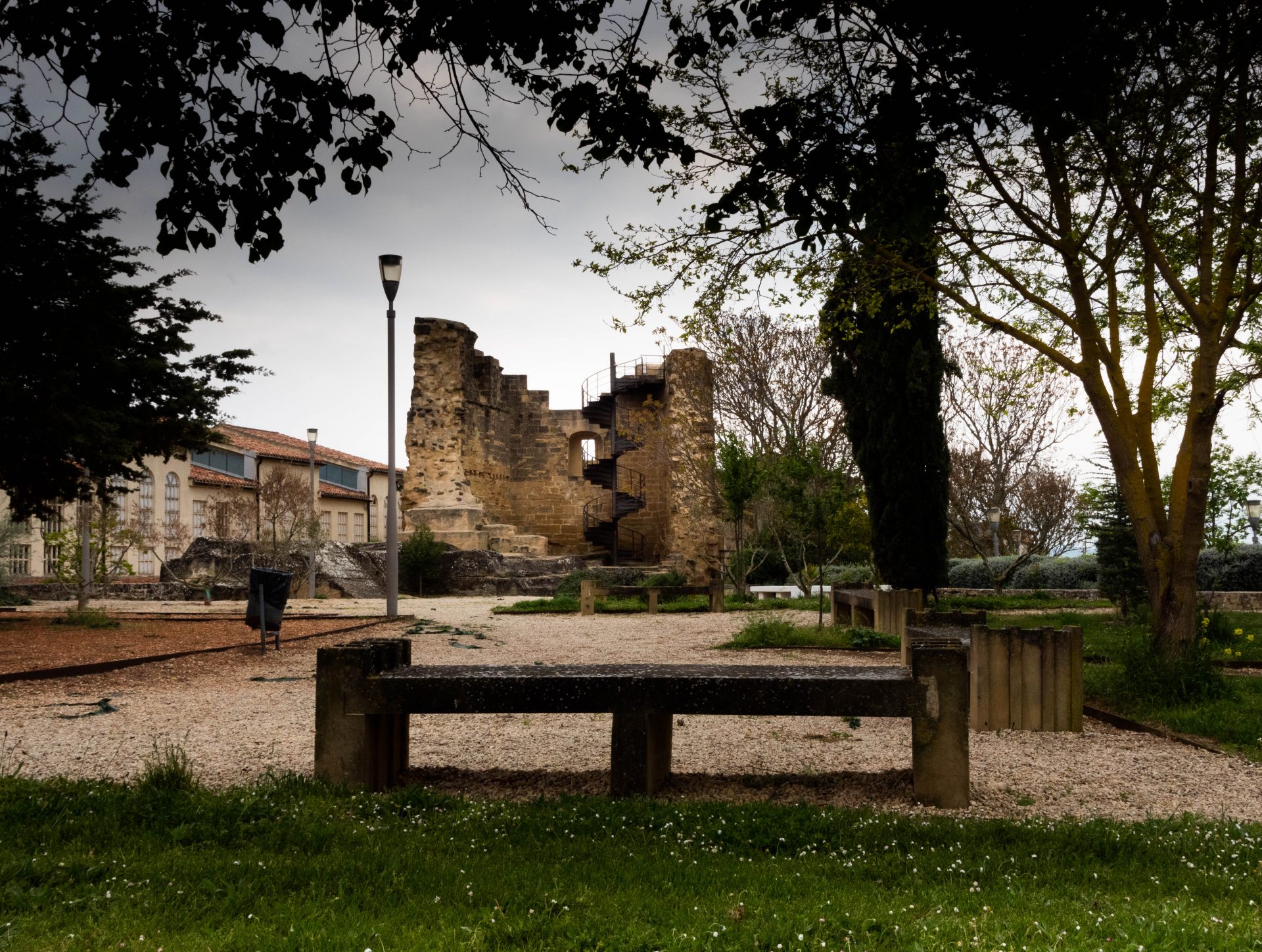
The old Briones fortress whose urban configuration was born out of the defensive character that this privileged place has had throughout history, border between Castile and Navarre.
We know that in 1240 the castle of Briones and several others who had D. Diego López de Haro, were demolished by Ferdinand III.
The castle enclosure was completed with that of the town centre by means of walls in which they were opened 6 doors.
The building stretches from north-east to south-west following a elongated trapezoidal layout. From the castle grounds only part of the outer wall remains.There is a 2-metre-thick wall built in masonry with reinforcing ashlars, which sits on the rock.
At the south-west end of the enclosure was closed by the Keepbuilt in ashlar with three floors and crowned by a cornice on matacán corbels, collapsed in 1940, although three sections remain and were restored in 2005.
#6 Castillo de Castañares de las Cuevas
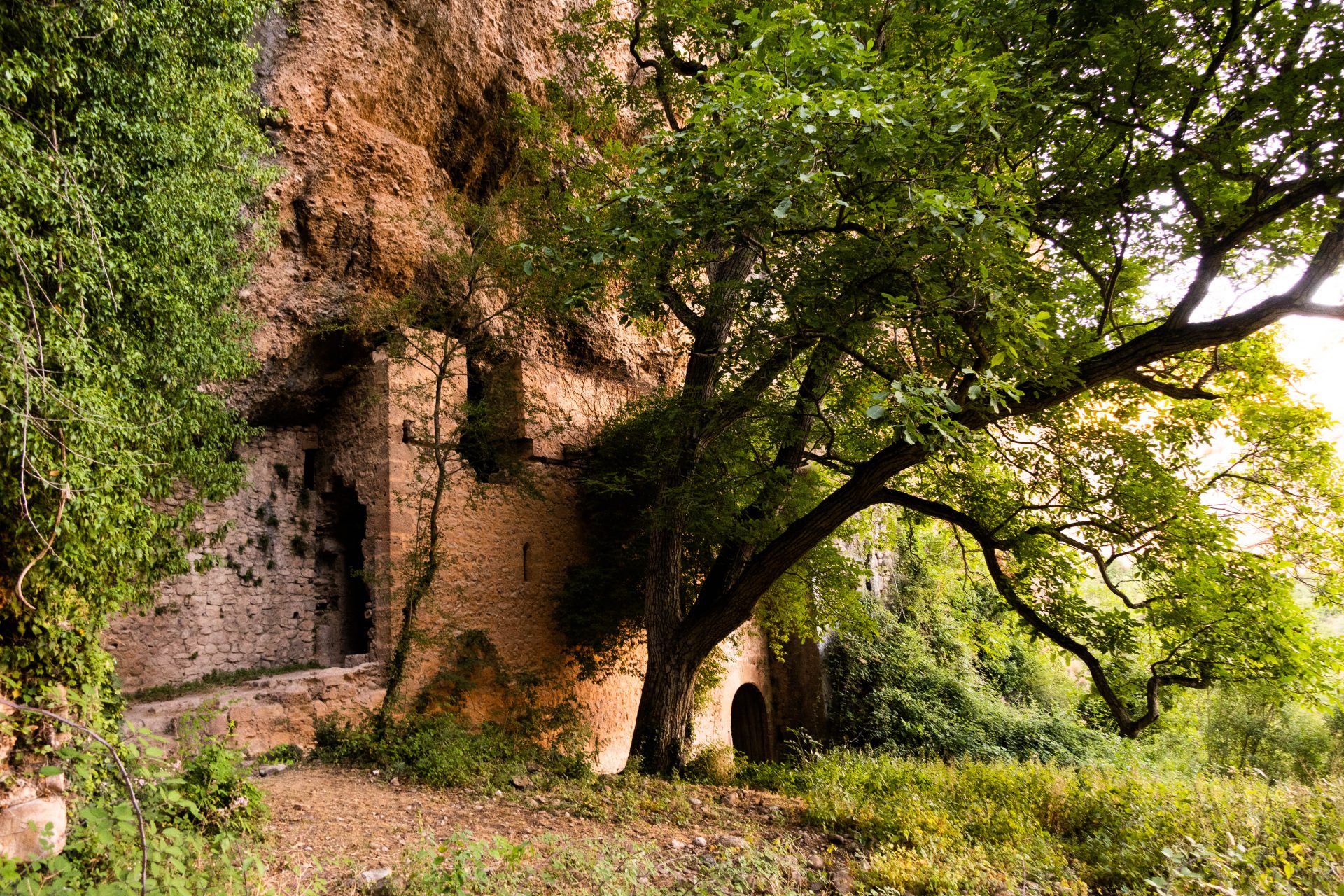
This cave castle is part of a cave complex which has been used since ancient times. Located in the walls of a ravine that penetrates the Sierra de Moncalvillo. Undoubtedly, a unique place.
The the plan of the castle is irregular and fits in with the layout of the rock and the existing natural caves that enclose its walls. At present, it is impossible to know the interior layout of the complex, as there are no dividing walls except for a short wall in the first enclosure.
Built in masonry porous limestone and river pebbles were used. It consisted of three floors, now lost, judging by the existing windows. The keep had a door leading to the first floor, which communicates with the surrounding cave dwellings on the outside, and another door probably leading to the interior of the fort.
To access you must park on the other side of the road and cross very carefully.. It is necessary to pass through a private estate with horses, so it is advisable to ask permission, and above all, to be respectful and leave the gates closed.
#7 Castillo de Clavijo y su épica batalla
Clavijo Castle is pre-10th century It is unclear whether it was built by the Christians or by the Arabs. Today only a few walls remain.
It was in the vicinity of this fortress that the mythical Battle of Clavijo of the Christian reconquest led by King Ramiro I of Asturias against the Muslims, on 23 May 844, and in which the Apostle James appeared on his white horse.
As usual, the fortress was erected in a strategic location. on a big rock which is currently used to climbing.
#8 Castillo de Cervera de Rio Alhama

En Cervera de Rio Alhama se encuentran las ruinas del su castillo sobre la peña de San Antonio.
De nuevo un castillo en una zona fronteriza. Cuenta con una gran tower of homage rectangular con patio interior con aljibe y paso angosto acodillado y escalera que lo pone en contacto con el exterior y por otro lado, un amplio patio con torreón.
Tiene tres posibles accesos: desde la calle Juan Jiménez; la calle Balija o por el Barranco del Toyo.


#9 Castillo de Cornago
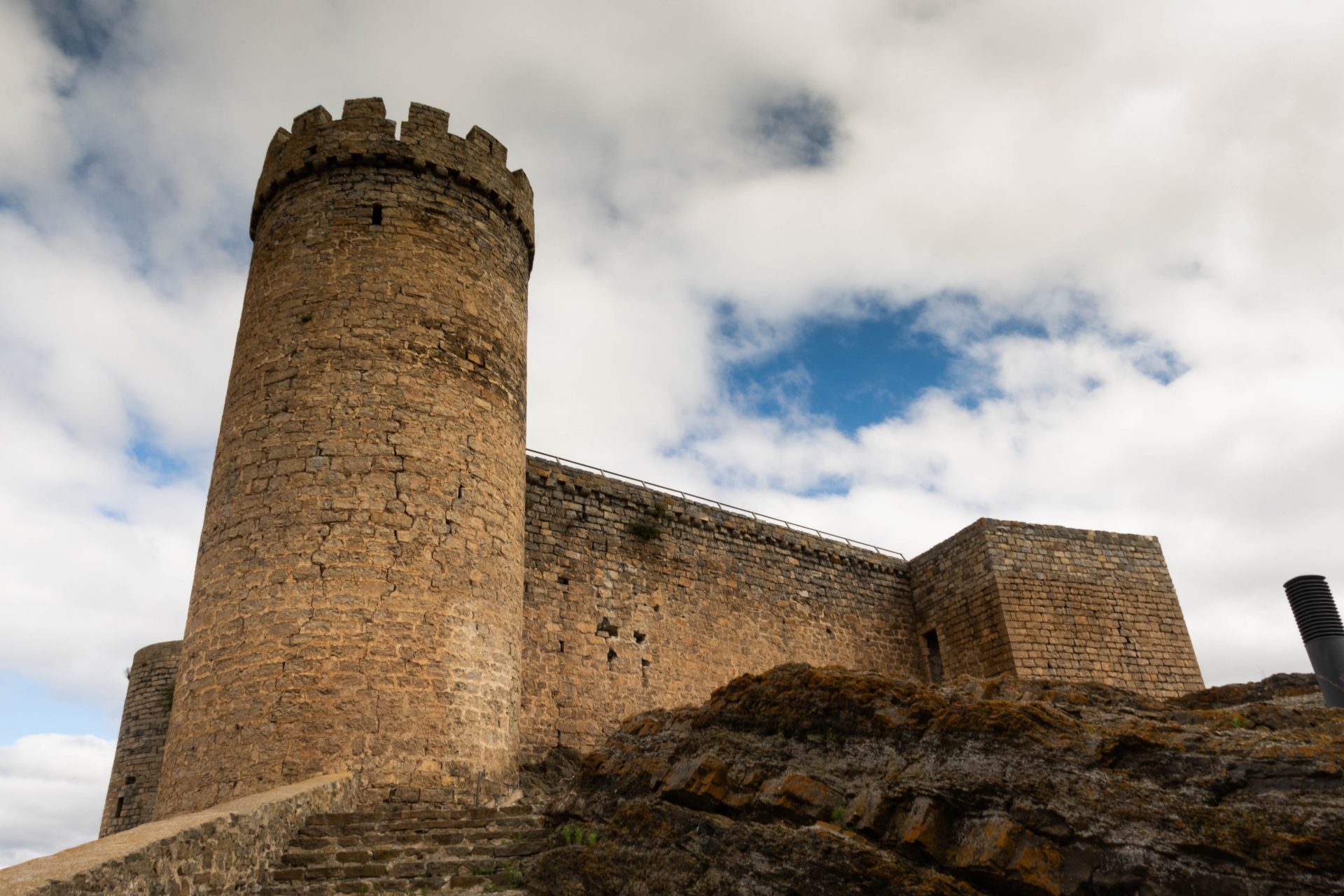
The Cornago Castle was built in the 13th century on an earlier 9th-century fortress. It stood on a border area between the kingdoms of Navarre, Castile and Aragon.
Built in ashlar, it has rectangular plan with a tower at each corner. Three of the towers are cylindrical in shape, although of different dimensions, while the tower to the northeast is square.
The castle was used as a cemetery from the 19th century until the 1980s, when rehabilitation work began.
De los castillos en La Rioja Baja, el de Cornago es el más representativo de la zona.
#10 Castillo de los Velasco en Cuzcurrita de Río Tirón

In the heart of the historic centre of Cuzcurrita, next to the river Tirón, is located the castle de los Velasco which was built at the end of the 15th century by Pedro Suárez de Figueroa. It is a walled enclosure with cubes at the corners and a slender keep, which has no windows in its walls.
In the 16th century, during the reign of Philip II, Pedro de Velasco, IX lord of Cuzcurrita, founded an entailed estate when he married Marta de Rojas y Osorio, by carving out the coat of arms of the pointed arched doorway on the north wall, defended by a beautiful matacan.
In the back of the castleNext to the washhouse is the waterfall that falls from the channel that starts at the dam and joins the river Tirón at this point.
Es uno de los castillos en La Rioja mejor conservados.
#11 Castillo de Davalillo
The castle of Davalillo is a Romanesque building from the end of the 12th century Alfonso VIII reigned in Castile.
Davalillo was a village that has now disappeared, and now belongs to the town of San Asensio, 5 km from it, of which part of the castle is preserved and at its foot the Hermitage of Nuestra Señora de Davalillo.
In 2019 the castle was acquired by a major local winery with plans to renovate it.
#12 Castillo de Enciso

El Castillo de Enciso se encuentra en la parte más alta de la población detrás de la iglesia y por las características de la construcción se considera que su origin is Muladi around the 10th century.
Actualmente, se encuentra en estado de ruinas.
#13 Castillo de Herce
Once again we are faced with another fortress of which hardly any of the following remains ruins.
Herce Castle is named in a document from the year 1200 and was part of the same defensive line as other castles in the area.
#14 Castillo de Inestrillas

Entre los pueblos de Cervera de Río Alhama y Aguilar de Río Alhama se encuentra Inestrillas con este pintoresco castillo tallado en la roca.
#15 Castillo de Leiva
Before the castle of Leiva that we can see today, there was a fortress that collapsed. around 1478. The construction of the present castle began in the same year and lasted 20 years. It has 4 octagonal towers and a surface area of 1,110m².
Throughout its history it has had different uses and owners. It currently belongs to the Government of La Rioja.
#16 Torre Fuerte de Muro de Aguas
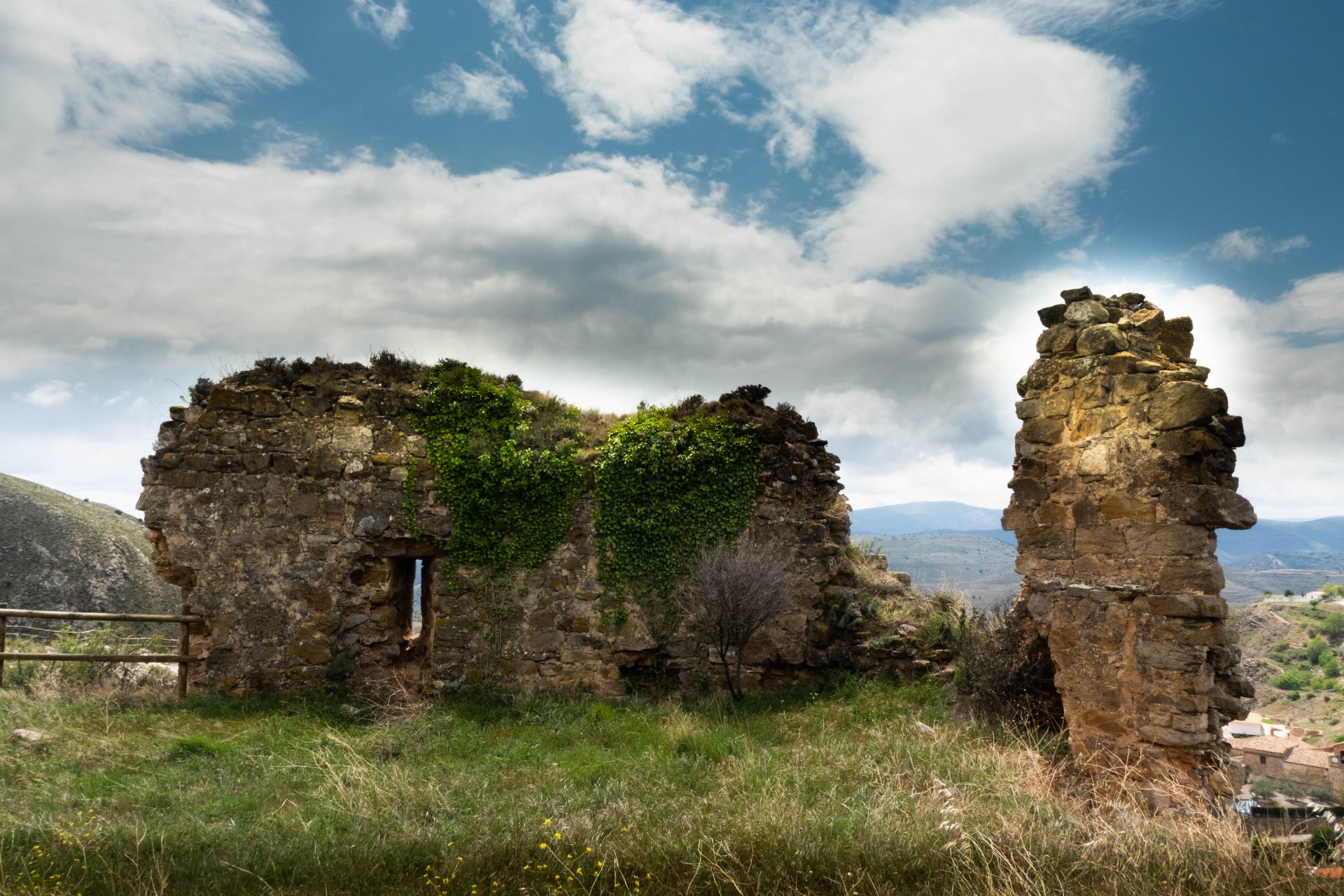
A lo alto de Muro de Aguas se encuentran las ruinas de su torre fuerte a las que hay que acceder a pie.
Más interesante que las escasas ruinas que quedan del castillo son las ruinas de la antigua iglesia de Santa María, las cuales se encuentran en plena subida al castillo, mejor conservadas y con una panorámica de Muro de Aguas completa.
#17 Castillo de Prejano
The Prejano Castle consists of a rectangular enclosure and a spectacular pentagonal tower of 15 metres dating from the 15th century.
The fortified enclosure was used as a cemetery until a few years ago.
#18 Castillo de Quel
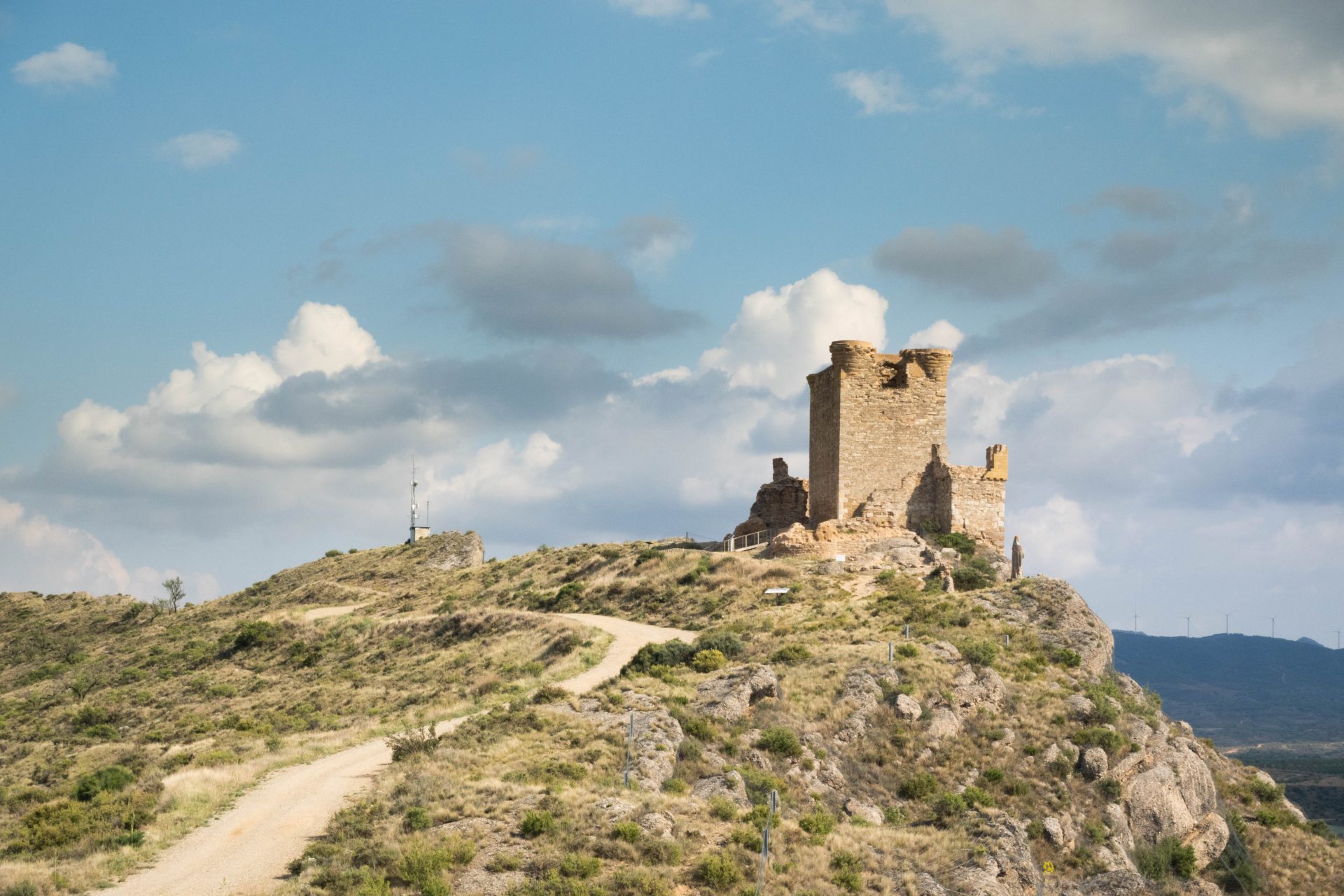
The castle of Quel was built in the year 1470 on a hill about 100 metres high.
The castle consists of a main tower and una muralla que puedes recorrer por tu cuenta gracias a la reconstrucción que tuvo lugar en el año 2012.
Junto al castillo se encuentra la imagen de una Virgen, y todo el conjunto ofrece una bonita vista panorámica del pueblo de Quel.
Puedes acceder en coche hasta el propio castillo por un camino de grava.
#19 Castillo de Sajazarra

In the 15th century there was a primitive tower in Sajazarra that was destroyed for building the castle which, a century later, continued to undergo remodelling and changes until it became the imposing construction that we can see today.
Its history is linked to that of Haro, which passed into Castilian hands in 1430. Its owner, Pedro Fernández de Velasco, also owned other castles such as Cerezo, Ojacastro and Arnedo. It belonged to the Counts of Nieva and defended the northern part of the town and the road from Haro to Miranda.
The tower of homage rises above the rest of the building. It is located in the centre of the fortress. It is rectangular in shape and has four octagonal-shaped garitons at its corners.
The entry is framed by two cubes which serve as an aid to its defence. It seems that the fortress had a moat that is now covered.
Como todos estos edificios, el material utilizado para su construcción fue la piedra. Es uno de los castillos en La Rioja mejor conservados, siendo su titularidad private.
#20 Castillo de San Vicente de la Sonsierra

The castle of San Vicente de la Sonsierra was built on the top of a hill by order of the King of Navarre Sancho IV in 1170. Opposite it and on the other side of the river Ebro is the castle of Davalillo, which belonged to the Kingdom of Castile.
It is a military construction which was used until the end of the Carlist Wars in 1876.
It has undergone numerous restorations in recent decades.



#21 Torre Fuerte de Torremontalbo
Torremontalbo is home to the Strong Tower of the Zúñiga family, with a square floor plan in ashlar masonry, within an attractive complex of palace, church and gardens.
The inside is divided into a ground floor, a main floor and four upper floors. Access between the different floors is by means of a staircase The small wooden staircase leads from the main floor to the first floor and, via a ladder, to the other floors.
The earliest records of this fortress date from 1096. At the end of the 13th century, Hernán López de Estúñiga was named Lord of Montalbo. In 1434, Diego de Zúñiga, bishop of Calahorra and La Calzada founded an entailed estate with all his possessions, including Montalbo, in favour of his nephew Íñigo de Zúñiga.
This place was strategic and it also meant controlling the crossing of the Ebro as well as a kind of border between Burgos and Logroño. At the end of the 18th century, thanks to the marriage between Magdalena Arista de Zúñiga and her uncle, Francisco Manso de Zúñiga, Count of Hervías, the latter title was added to the heirs of Montalvo. Since then, the tower has been in possession of the same family.
Esperamos que disfrutes visitando los castillos en La Rioja que más llamen tu atención.
Puedes suscribirte de forma gratuita a La Rioja Premium y recibir la newsletter semanal.